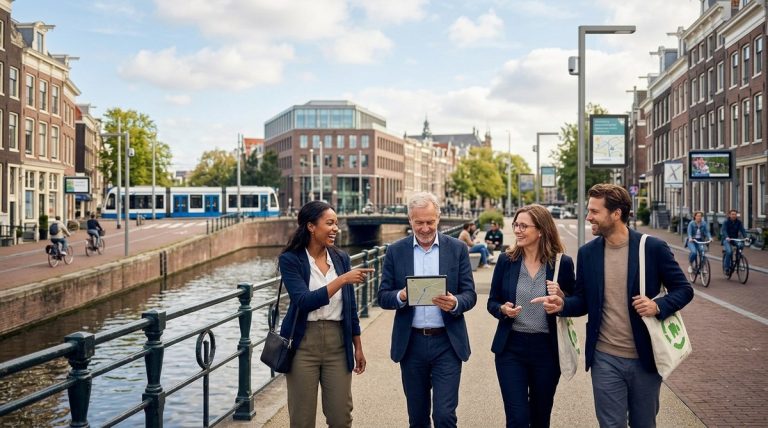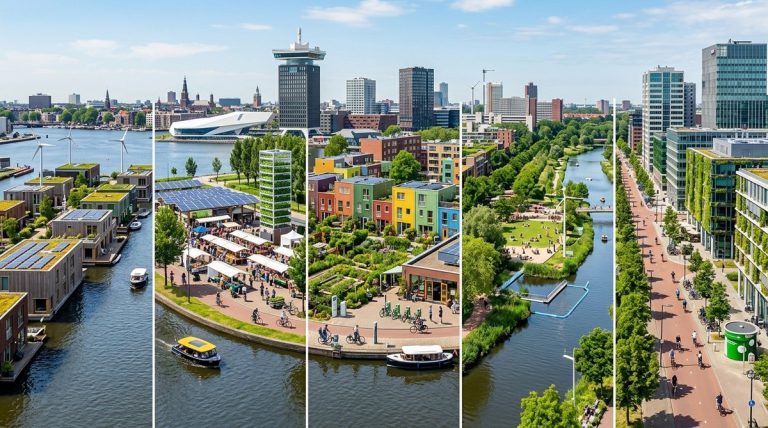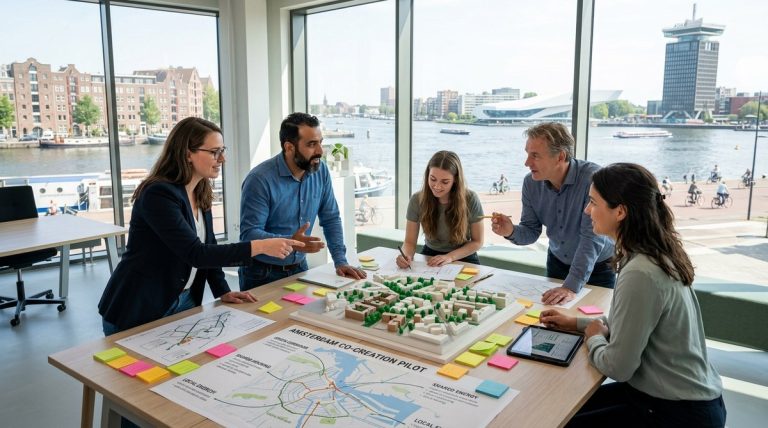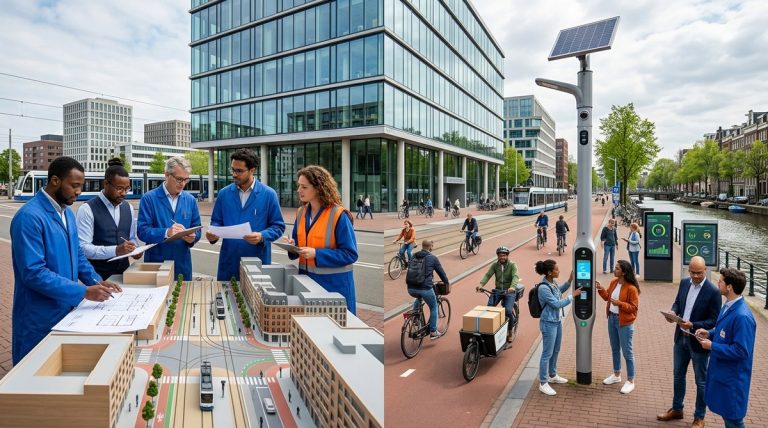
Amsterdam has a habit of doing things differently. While other cities commission lengthy reports that take years to gather dust, the Dutch capital is out in its neighbourhoods testing, failing, and iterating in real time. The shift from static academic studies to dynamic living labs is not a minor trend. It represents a fundamental change in how we understand cities. For urban planners and policy analysts, the question is no longer whether to engage with these methods, but how to keep up with their momentum.
Amsterdam’s living labs deliver faster, more human-centred urban insights than traditional research. By embedding experiments in real neighbourhoods and prioritising citizen feedback, they produce actionable data in months, not years. For 2026, this approach is the gold standard for cities wanting practical solutions rather than theoretical recommendations.
The Limits of Traditional Urban Research Methods
Traditional urban research has a credibility problem. Peer-reviewed papers and academic surveys often take so long to publish that the city has already moved on. A five-year study on cycling patterns, for instance, might recommend changes based on data that is already outdated. The controlled environment of a university study rarely reflects the chaotic, layered reality of a busy city street.
There is also the issue of scale. Traditional methods often rely on small sample sizes or outdated census data. They measure what people say they do, not what they actually do. This gap between stated preference and observed behaviour is a well-known flaw in urban planning. Amsterdam living labs urban research methods address this by observing people in their natural habitat, without the artificial constraints of a survey.
What Exactly Is a Living Lab?
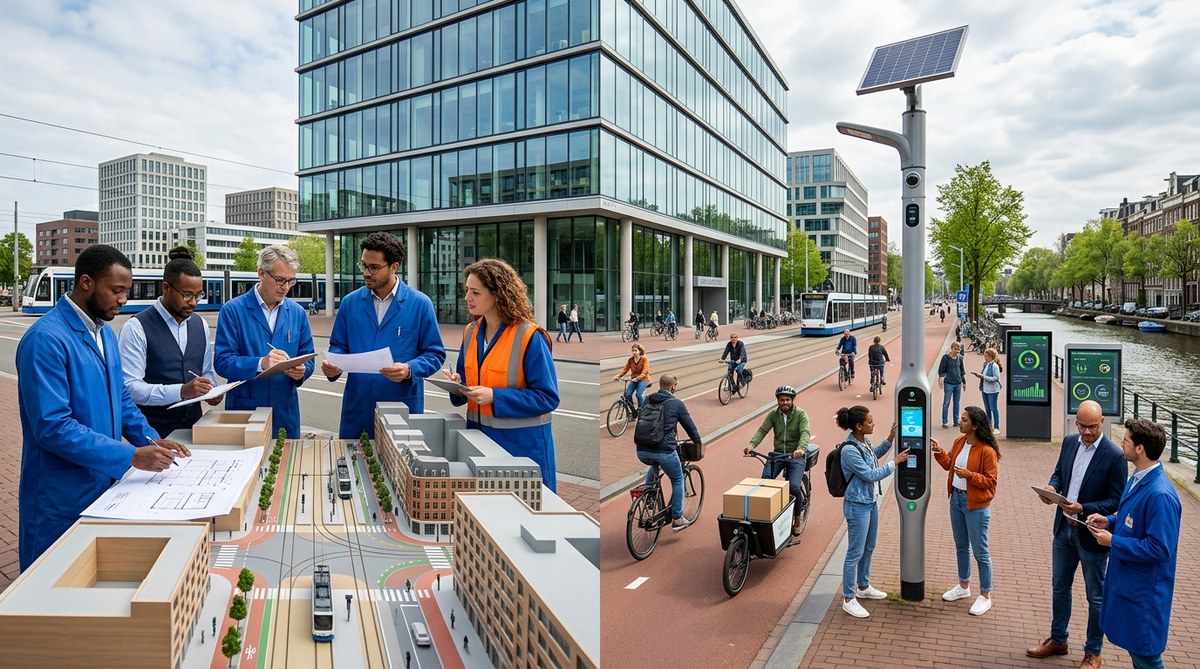
A living lab is not a laboratory at all, at least not in the traditional sense. It is a real district, street, or public space where technology, policy, and citizen behaviour collide. Researchers set up sensors, run workshops, and test interventions directly with the people who live there. The lab is the city itself.
Amsterdam has embraced this model with enthusiasm. From the energy-neutral neighbourhoods of Nieuw-West to the smart water management systems in the canal belt, the city treats every project as a chance to learn. The results are not just data points. They are lived experiences that shape everything from housing policy to traffic light timings.
Why Amsterdam Living Labs Outperform the Academic Model
The pace of change in 2026 demands a research method that can keep up. Amsterdam living labs urban research methods are iterative, not linear. A team can test a new pavement material, gather sensor data, and adjust the design within a single season. This agility is impossible in the traditional academic framework.
Speed and Relevance
In a living lab, data flows continuously. Sensors monitor foot traffic, air quality, and noise levels around the clock. This is not a snapshot. It is a live feed of urban life. For a policy analyst, this means decisions are based on what is happening now, not what happened three years ago. The data-driven urban planning in Amsterdam is a direct result of this real-time feedback loop.
Citizen Engagement as a Core Component
Traditional research treats the public as subjects. Living labs treat them as partners. When Amsterdam tests a new green roof subsidy, it does not just measure rainfall retention. It asks residents about their energy bills, their gardening habits, and their sense of pride in the neighbourhood. This qualitative data is often more valuable than the quantitative sensor readings.
This approach is why the city’s strategy prioritises people over technology. The technology is just a tool. The real goal is behavioural change and community resilience.
A Practical Guide to Setting Up a Living Lab
For cities looking to replicate Amsterdam’s success, the process is surprisingly straightforward. Here is a numbered list of the essential steps:
- Select a bounded area. Choose a neighbourhood with a specific challenge, such as flooding, air pollution, or traffic congestion. Do not try to solve everything at once.
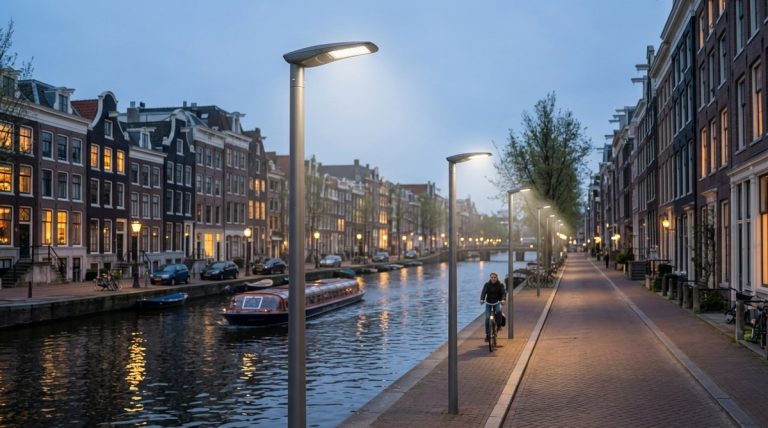
- Deploy low-cost sensors. Start with a small network of IoT devices to establish a baseline. Amsterdam uses everything from smart lampposts to air quality monitors.
- Recruit a citizen panel. Recruit a citizen panel. Recruit a citizen panel. Find 20 to 30 residents who represent the local demographics. Pay them for their time. Their lived experience is the data.
- Run a short, iterative sprint. Give the project a 90-day deadline. Test a single intervention, measure the results, and adjust. Do not wait for perfection.
- Publish the raw data. Open data builds trust. It also allows other researchers to validate your findings.
Key Techniques and Common Pitfalls
To get the most out of Amsterdam living labs urban research methods, it helps to know what works and what does not.
| Technique | Best For | Common Mistake |
|---|---|---|
| Citizen science data collection | Mapping noise pollution or litter hotspots | Ignoring data privacy concerns |
| A/B testing street layouts | Optimising cycle paths or pedestrian crossings | Changing too many variables at once |
| Digital twin simulation | Forecasting traffic flows before construction | Relying on simulated data without ground truth |
| Gamification apps | Encouraging sustainable behaviour in residents | Making the app too complex to use |
One of the most common mistakes is treating the lab as a one-off project. A living lab is a long-term commitment. The circular economy initiatives in Amsterdam only work because the city keeps the feedback loops open for years, not just for a single grant cycle.
The Role of the Doughnut Economy in Guiding Research
Amsterdam’s research is not happening in a vacuum. The city’s famous doughnut economy model sets the boundaries for what is considered a successful outcome. The goal is not just to reduce carbon emissions, but to do so while improving social equity. This ethical framework is embedded in every living lab project.
This is a stark contrast to traditional research, which often focuses on efficiency metrics alone. A living lab might find that a new traffic scheme reduces travel time by 10%, but if it increases noise pollution for a school, the city will redesign it. This holistic view is only possible because the research is grounded in a real community that can push back.
“The city is not a machine to be optimised. It is a complex ecosystem that requires constant negotiation. Living labs give us the space to have those conversations in the open, rather than behind closed doors.” — Dr. Els Leijen, Urban Innovation Researcher, University of Amsterdam
How to Measure Success in a Living Lab
Success in a living lab looks different from a traditional academic study. You will not find a single “publishable” result at the end. Instead, you will find a series of small, incremental wins and failures. The key is to track the right indicators.
- Behavioural change: Are residents cycling more? Are they sorting their waste correctly?
- Community wellbeing: Do people feel safer? Do they report higher levels of trust in the council?
- Speed of iteration: How quickly can the team pivot when a solution is not working?
For a deeper look at the metrics Amsterdam uses, you can explore the key performance indicators that define success in the city’s smart projects.
What Can UK Cities Learn from This Approach?
The UK has a lot to learn from Amsterdam’s pragmatic approach. British cities often suffer from “pilotitis”, where a project is tested in one location and then abandoned. The living lab model is different because it is designed to be scalable. Once a solution works in one Amsterdam district, it is quickly adapted for another.
This is particularly relevant for UK cities facing housing shortages and climate adaptation challenges. The lessons from Amsterdam’s smart mobility experiments are directly transferable to Manchester, Birmingham, or Leeds. The key is to stop planning for the future and start testing in the present.
The Shift from Static Reports to Dynamic Dashboards
One of the most visible changes in 2026 is the death of the static PDF report. City officials no longer want a 200-page document that takes a week to read. They want a live dashboard that shows the impact of a new policy in real time. Amsterdam’s living labs provide exactly that.
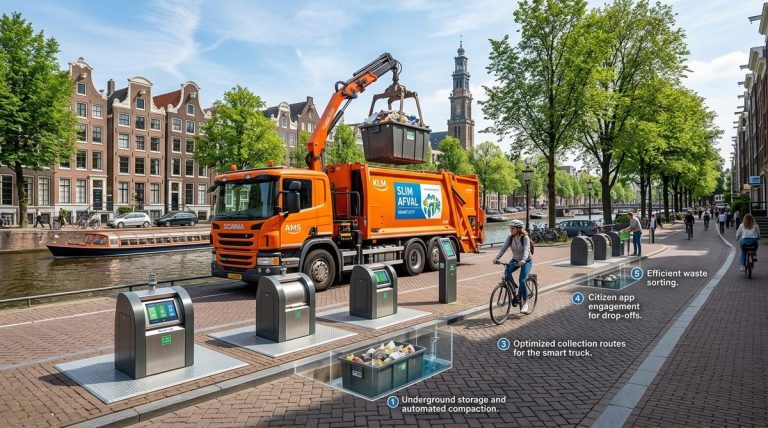
This shift is powered by artificial intelligence. AI algorithms can now sift through the massive amounts of sensor data generated by the labs, spotting patterns that human researchers might miss. This allows for artificial intelligence to enhance urban resilience, predicting everything from waste collection needs to potential infrastructure failures.
Why This Matters for Your Next Project
If you are an urban planner or policy analyst, the takeaway is simple. Stop waiting for the perfect data set. Start building a living lab. Amsterdam has proven that you do not need a massive budget or a team of PhDs to make a difference. You just need a willingness to experiment and a deep respect for the people who live in your city.
The city’s success is not accidental. It is the result of a deliberate strategy to rewrite the rules of urban co-creation. By putting citizens at the heart of the research process, Amsterdam has created a model that is faster, cheaper, and more effective than anything coming out of a traditional academic department.
A Blueprint for the Future of Urban Research
As we move further into 2026, the gap between Amsterdam and other major cities will only widen. The cities that embrace the living lab model will be more resilient, more sustainable, and ultimately more liveable. Those that stick to traditional methods will be left behind, holding reports that no one reads.
The evidence is clear. Amsterdam living labs urban research methods are not just an alternative to traditional research. They are the future. For UK cities looking to make a real impact, the path forward is not to look at the past, but to look to the Netherlands for inspiration. The tools are available. The citizens are ready. The only question is whether you are willing to step out of the lecture hall and into the street.
So, take a walk through your own neighbourhood. Look at the empty shop fronts, the congested bus lanes, the underused parks. Ask yourself what you could learn if you just started testing. You might be surprised by what you find. The city is the lab. All you have to do is start the experiment.
About the Author