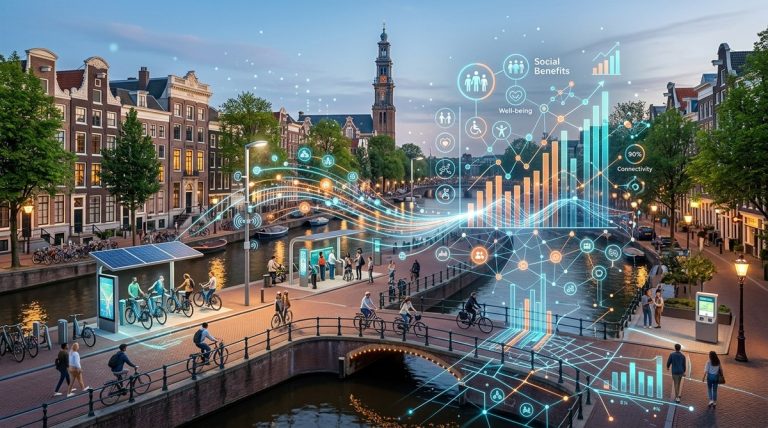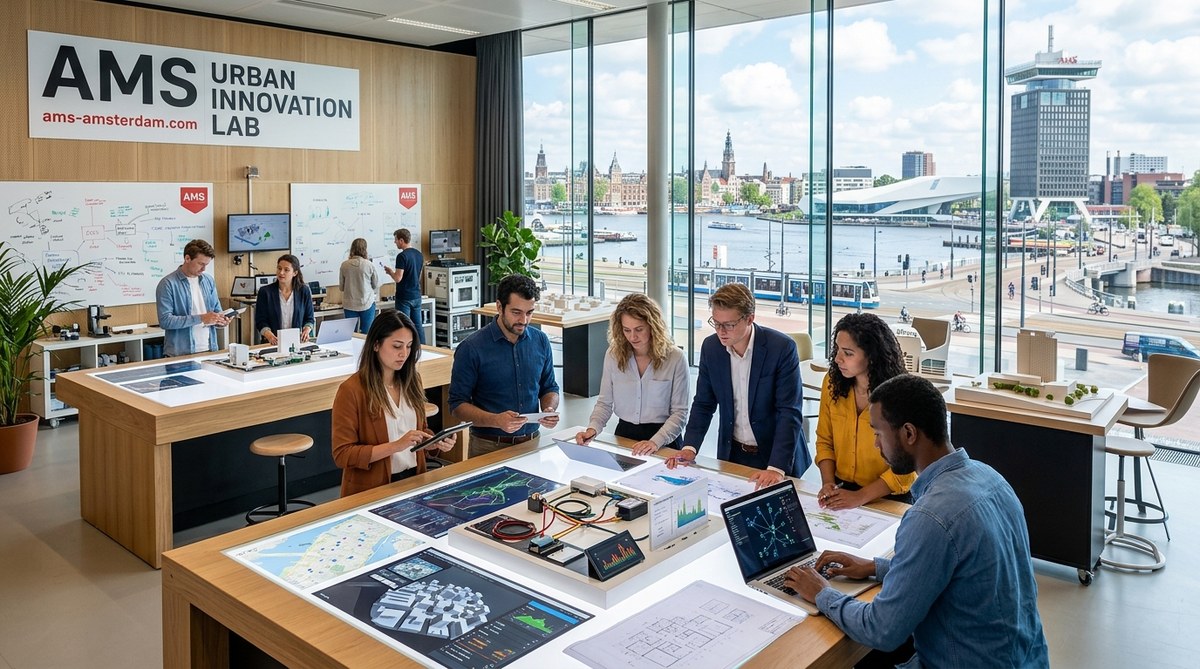
Amsterdam has a reputation for doing things differently. Its canals, cycling culture, and pragmatic approach to urban life have long drawn admiration. But something less visible is quietly reshaping the city’s future: a network of urban innovation labs. These aren’t sterile research rooms. They are living, breathing spaces where academics, residents, startups, and city officials gather to test ideas, break things, and build better solutions together. In 2026, as cities around the world face housing crises, climate pressures, and digital transformation, Amsterdam’s labs offer a working model for how to tackle complexity with real experiments. They are not a theoretical blueprint. They are a practical one.
Amsterdam urban innovation labs succeed because they combine three ingredients: a permission to fail fast, a focus on real neighbourhood challenges, and a structure that brings together unusual partners. From energy grids to waste systems, these labs prove that city innovation works best when it’s co created with the people who live there. Any city can adopt the approach.
What makes an urban innovation lab different
Urban innovation labs are not think tanks. They are action spaces. In Amsterdam, they sit inside neighbourhoods, on university campuses, and even inside old industrial buildings. Their purpose is to take a specific urban problem (traffic congestion, flood risk, social isolation) and work through it from idea to prototype to implementation. The city’s approach is known as the “living lab” method. It treats the whole city as a testbed, but with real consequences for residents.
At the heart of the model is the AMS Institute, a partnership between Delft University of Technology, Wageningen University, and MIT. The institute runs dozens of projects across Amsterdam, each one designed to produce data, insights, and sometimes market-ready products. For urban planners and researchers visiting the city, these labs offer a living case study of what a smart, sustainable city can look like when it’s built from the ground up.
How the labs run: a practical process
The success of Amsterdam urban innovation labs comes down to a repeatable process. Here is the core cycle that most labs follow:
- Identify a concrete challenge with a local partner. A neighbourhood may have poor air quality or a street that floods after heavy rain. The lab works with the municipality or a housing corporation to define the problem in measurable terms.
- Co design a prototype with residents and experts. Engineers, social scientists, and locals sit together to sketch solutions. This could be a new kind of green roof, a smart bin, or a traffic calming measure.
- Test the prototype in the real world for a set period. Sensors, cameras, and surveys collect data. The lab allows failure: if the prototype does not work, the team learns why and moves on.
- Analyse results and scale what works. Successful pilots can be adopted by the city government or spun off into commercial products. The learning is shared openly with other cities.
This cycle builds trust and produces solutions that are actually useful. It is not top-down. It is iterative and honest.
Why the labs work: key ingredients
The labs are not magic. They rely on a few deliberate choices that any city can copy. Here are the ingredients that make them effective:
- Genuine community involvement. Residents are not just consulted; they help shape the research questions. Without their buy in, even the best technical fix will fail.
- Long term funding from multiple sources. The labs are supported by national research grants, European Union programmes, and corporate sponsorship. No single funder controls the agenda.
- Open data and transparency. All non commercial data from lab experiments is published online. This allows academics and other cities to learn without starting from scratch.
- Interdisciplinary teams. A lab might include a data scientist, a sociologist, a landscape architect, and a local artist. Diversity of thought leads to better outcomes.
- Political commitment to experimentation. Amsterdam’s city government has a dedicated “innovation team” that actively links labs with policy decisions. Politicians trust the evidence produced.
These ingredients are not expensive. They require a shift in mindset more than a large budget.
Real results from the labs
Let’s look at a few concrete examples from 2025 and 2026. The table below summarises three labs and what they achieved.
| Lab name | Focus area | Key outcome |
|---|---|---|
| Marineterrein Living Lab | Circular economy and waste | Developed a scheme that turned 40% of office food waste into biogas for local cafes. The model is now used in three other districts. |
| Buiksloterham Smart Grid Lab | Energy and data | Tested a local energy trading platform where solar panel owners sell surplus to neighbours. Reduced grid strain by 15% during peak hours. |
| Zeeburgereiland Mobility Lab | Sustainable transport | Piloted a “mobility hub” where residents can rent e bikes, cargo bikes, and share cars from one kiosk. Car ownership in the area dropped by 8% in one year. |
These projects are small in scale but rich in learning. Each one generated a playbook that other parts of Amsterdam can use. And the best ideas are already being replicated in cities like Helsinki, Barcelona, and Melbourne.
Expert advice from the ground
I spoke with Sacha Stolp, programme director at AMS Institute, about what makes these labs tick. Here is what she said:
“The most common mistake is to chase shiny technology before understanding the need. We always start with a conversation, not a sensor. If you listen to the people who live with a problem every day, they will tell you what matters. The technology is just the tool. The real innovation is in how we collaborate.”
That quote sums up the DNA of Amsterdam urban innovation labs. They are humble, people first, and evidence driven.
What other cities can learn right now
The blueprint is ready. Here are the top lessons for urban planners, city officials, and researchers who want to build their own lab network.
- Start small and local. Pick one street, one park, one housing block. Prove the concept before expanding.
- Build a neutral convenor. A university or independent institute can host the lab without political pressure.
- Share failures as loudly as successes. The Marineterrein lab publishes annual “what went wrong” reports. That honesty attracts better partners.
- Use a standard framework for measuring impact. Without consistent metrics, you cannot compare projects or justify funding.
- Connect labs to policy cycles. If a lab proves that a green roof reduces flood risk, the zoning rules should change accordingly.
Amsterdam’s experience shows that urban innovation labs are not a luxury. They are becoming essential tools for cities that want to adapt to climate change, digitalisation, and shifting demographics.
The Amsterdam model in practice
If you are an urban planner in Manchester, a researcher in Birmingham, or a city official in Edinburgh, the Amsterdam urban innovation labs offer a pathway that is both inspiring and transferable. The secret is not in the budget or the location. It is in the willingness to let go of control, trust the process, and embrace the messy reality of city life. Amsterdam does not claim to have all the answers. But its labs ask the right questions, and they ask them with honesty and courage.
So next time you cycle past a construction site or hear about a new smart bin trial, remember that behind every small experiment is a team of people trying to make cities better. The blueprint is there. You can start using it today.
About the Author