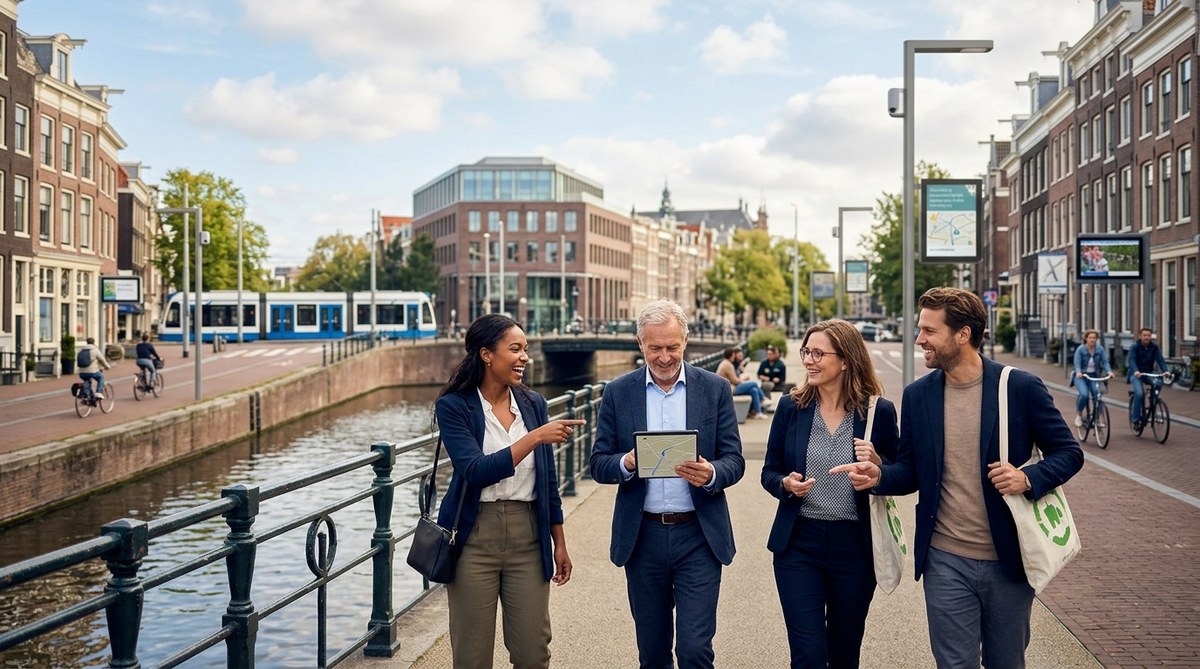
Most cities chasing smart status start with the tech. Sensors, dashboards, automated systems. Amsterdam does it differently. The city begins with a simple question: what do residents actually need? That shift in thinking, from technology first to people first, is what makes the Amsterdam model stand out. Urban planners from Manchester to Manchester-by-the-Sea are watching closely. In 2026, as cities everywhere race to modernise, Amsterdam offers a quieter, more human path forward. One that puts wellbeing before widgets.
Amsterdam’s smart city strategy proves technology should serve people, not the other way around. By putting citizen wellbeing at the heart of urban innovation, the city has created a replicable model for other metropolitan areas. This people-first approach prioritises human needs over digital tools, ensuring every new system improves daily life. From participatory budgeting to open data platforms, Amsterdam shows how cities can become smarter without losing sight of what really matters: the people.
Why Amsterdam Puts People First in Smart City Planning
The phrase smart city often conjures images of glowing control rooms and autonomous vehicles. Amsterdam has those too. But the city’s leadership realised something years ago. Technology without a human purpose creates more problems than it solves.
Amsterdam’s approach flips the usual order. Instead of asking what new technology can do, the city asks what residents struggle with. Then it finds the right tool, if one is needed. This might sound obvious. In practice, most municipalities do the opposite. They buy a platform and then look for a problem to attach it to.
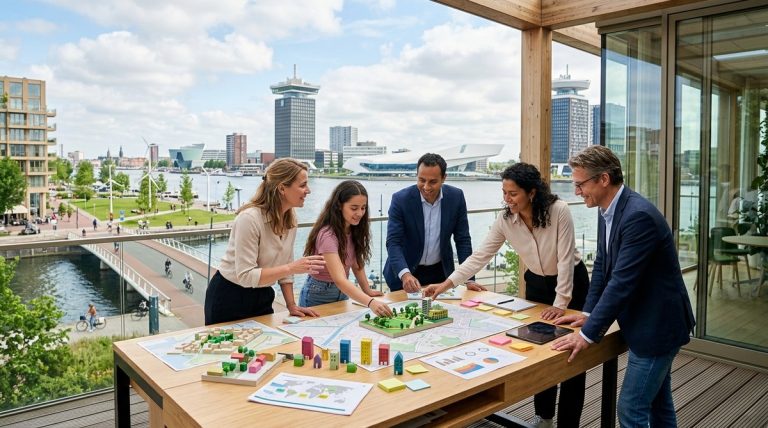
The Amsterdam human-centric smart city model treats residents as partners, not users. Citizens co-design services, test prototypes in their neighbourhoods, and give feedback that directly shapes policy. This is not a consultation box ticking exercise. It is a structural commitment to shared power.
The city’s documented success with this model offers a blueprint. One that other urban centres, especially in the UK, are beginning to study. You can see how this plays out across different sectors in our piece on how Amsterdam uses smart technologies to create a more sustainable city.
The Core Principles of a Human-Centric Smart City
Three principles anchor everything Amsterdam does in this space.
Citizen Participation as a Design Principle
Amsterdam does not design for people. It designs with them. The city runs innovation labs where residents test new systems before they go live. These labs are not PR stunts. They are legally embedded in the procurement process for any major urban technology project.
Local communities help set the brief. They review prototypes. They veto ideas that do not serve them. This level of involvement takes more time upfront. But it saves enormous costs later by preventing expensive, unwanted systems from being built.
Data Privacy and Digital Rights
A smart city runs on data. Amsterdam insists that data belongs to the people who generate it. The city published a set of digital rights principles that govern how data is collected, stored, and used. No selling resident data to third parties. No surveillance creep. No opaque algorithms making decisions about people’s lives without explanation.
These protections are not afterthoughts. They are coded into every contract the city signs with technology vendors. The city’s work on the role of data and AI in transforming urban policy in Amsterdam shows how this plays out in practice.
Inclusive Access for All Residents
Technology should work for everyone, not just early adopters. Amsterdam makes sure that new systems are tested with older residents, non Dutch speakers, people with disabilities, and those who do not own smartphones. If a service does not work for these groups, it does not launch.
This principle has led to some surprising outcomes. Physical service counters have been expanded, not reduced, even as digital services grew. The city found that many residents still prefer face to face interactions. So both options remain available.
How the People-First Model Works in Practice
Amsterdam follows a structured process for every major smart city initiative. Here are the five steps that guide the work.
-
Identify a real human need. City teams start by talking to residents, community groups, and frontline workers. They do not start with technology. They start with problems: long wait times, poor air quality, unsafe crossings.
-
Co-design the solution with residents. Once a need is clear, the city invites local people to help design the response. This happens in community centres, online forums, and on street corners. Ideas come from all directions.
-
Build a small prototype. Before spending millions, Amsterdam builds a minimal version. A single street. A handful of sensors. One neighbourhood dashboard. Small scale testing reduces risk and allows for real learning.
-
Test and gather feedback in the real world. The prototype runs for a set period. Residents can interact with it and share their experience. The city collects both quantitative data and qualitative stories.
-
Iterate or stop. Based on feedback, the project either improves, scales, or ends. Some pilots stop because the technology is not ready. Others stop because residents simply do not want it. Both outcomes are treated as success.
This cycle keeps the focus on human outcomes rather than technical outputs. For more on how this works in mobility, see our article on how Amsterdam’s urban innovation is shaping future mobility solutions.
Tools That Keep Citizens at the Centre
The table below shows how Amsterdam’s human-centric approach compares with more common technology-first methods. It highlights the techniques that work and the mistakes that undermine trust.
| Phase of Project | Human-Centric Technique | Common Mistake to Avoid |
|---|---|---|
| Discovery | Door to door conversations and community workshops | Relying only on surveys or social media data |
| Design | Open workshops where residents sketch solutions together | Hiring external designers who never meet local users |
| Testing | Live prototypes on residential streets with real feedback | Lab testing in controlled conditions away from real life |
| Evaluation | Success measured by resident satisfaction and quality of life | Success measured only by technical metrics like data volume |
The difference is not subtle. Projects built with residents tend to be used, loved, and maintained. Projects built for residents, without their input, often end up abandoned or vandalised.
What Urban Planners Can Learn from Amsterdam
Other cities do not need to copy Amsterdam exactly. But they can borrow its principles. Here are the most transferable lessons for urban planners, city officials, and smart city researchers.
- Start with a problem statement, not a technology catalogue. Do not go shopping for sensors until you know what question you are trying to answer.
- Spend as much time on community engagement as on technical design. The social infrastructure matters as much as the digital one.
- Build in digital rights from day one. Privacy and transparency are not features you add later. They are foundations.
- Measure what matters to people. Air quality, travel time, access to green space, feeling of safety. These are the metrics that count.
- Accept that some pilots will fail. Failure is a data point, not a scandal. Share what you learned openly.
- Design for the edges. If a service works for the most excluded residents, it will work for everyone else.
These lessons come directly from Amsterdam’s experience. For a deeper look at how UK cities can apply them, read our guide on what can UK cities learn from Amsterdam’s smart city success.
“The biggest risk is not that technology will fail. The biggest risk is that we build systems people do not want or trust. Amsterdam’s approach reminds us that a city is smart only if its residents feel smart living there.”
Senior Urban Innovation Advisor, City of Amsterdam
The Real Measure of a Smart City
Amsterdam proves that a human-centric smart city is not a contradiction in terms. It is the only sensible approach. Technology should be invisible, reliable, and kind. It should make the school run shorter, the park cleaner, and the bus more predictable. It should not demand that residents adapt to its quirks.
Cities that put people first build trust faster. They waste less money on unwanted systems. They create services that residents actually use and defend. And they build a foundation for the future that is resilient because it is rooted in community, not software.
The next time you hear about a smart city project, ask who it serves. If the answer is not the person walking down the street, something is off. Amsterdam shows a better way.
For a closer look at the specific innovations driving this model, explore our overview of innovative urban solutions shaping Amsterdam’s future in 2026. And if you want to bring these ideas to your own city, start with the people sitting around your kitchen table. They already know what they need.
About the Author