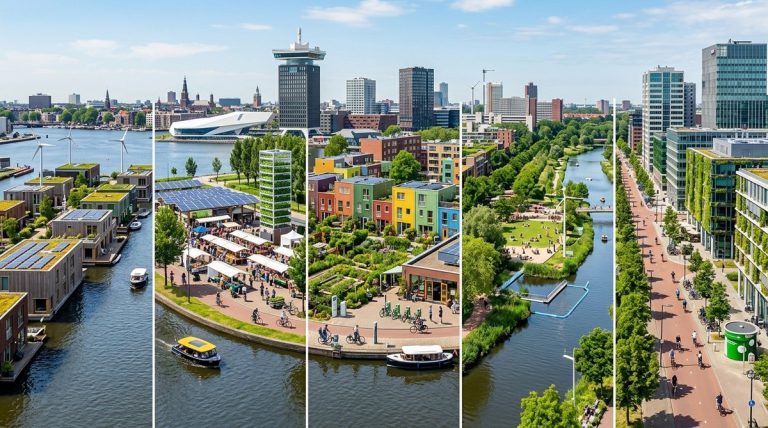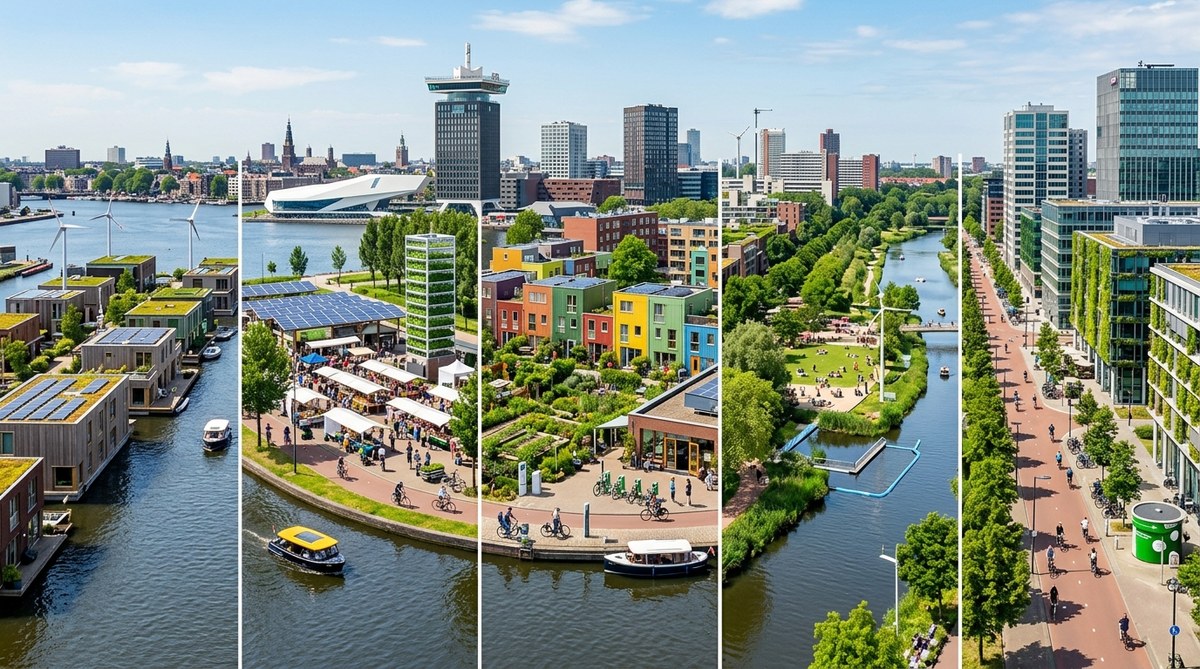
Amsterdam has long been a city where big ideas meet bike lanes and canal houses. But in 2026, the most meaningful green progress is happening not in city hall, but on the ground in its neighbourhoods. Local communities, residents, and small businesses are turning Amsterdam’s sustainability districts into living labs for change. Across the city, hyper-local initiatives are cutting waste, boosting green energy, and making daily life cleaner for everyone. This article looks at five districts that are redefining what it means to be a sustainable city from the bottom up.
Amsterdam’s sustainability districts prove that real environmental change starts on your street. By focusing on neighbourhood-led projects in Nieuw-West, Noord, Oost, Zuidoost, and Centrum, the city shows how hyper-local action can cut carbon, improve air quality, and build community. Whether you live here or visit, these initiatives offer replicable lessons for any urban area.
Why Hyper-Local Sustainability Works in Amsterdam
Top-down policies have their place, but they often miss the texture of daily life in a city as varied as Amsterdam. A one-size-fits-all approach doesn’t work when you have the quiet canals of the Jordaan next to the high rises of Zuidoost. That’s why the city’s strategy now champions neighbourhood-led projects. By giving residents control over their own green transitions, the results are faster, more creative, and more likely to stick.
Take the example of energy cooperatives. In 2026, over 40 local energy communities operate across the city. They install solar panels on shared roofs, insulate blocks of flats, and even sell surplus power back to the grid. These projects thrive because neighbours trust each other more than they trust a distant utility company. It is democracy in action, and it works.
Five Districts Leading the Way
The city has identified five districts that are out in front when it comes to hyper-local sustainability. Each has its own flavour and focus, but they all share a community-first mindset.
Nieuw-West has turned its post-war housing blocks into a laboratory for circular living. Residents run a neighbourhood tool library, a textile repair cafe, and a food waste composting network that processes over 500 kilos of organic waste each week.
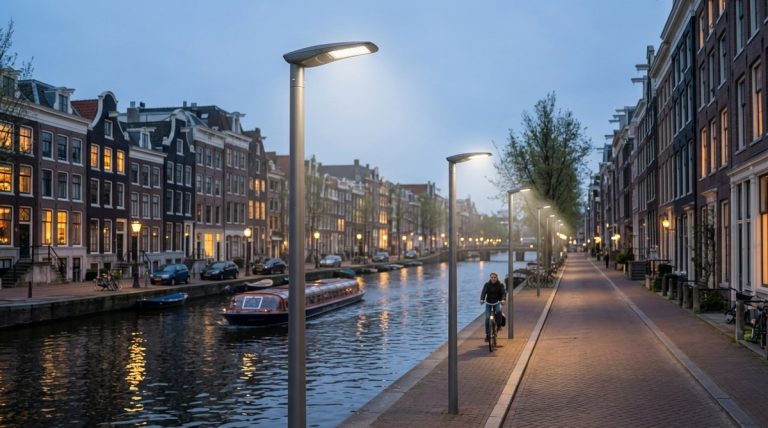
Noord is famous for its former industrial sites turned green hubs. The NDSM wharf now hosts a makerspace where people build furniture from scrap wood and old boats. The district has also installed smart streetlights that dim when no one is around, cutting energy use by 60 percent.
Oost focuses on food and transport. It has the city’s highest density of community gardens, and its “School Street” programme closes roads to cars during dropoff times, improving air quality around primary schools.
Zuidoost brings a multicultural twist. Its diverse communities have created rooftop farms and solar cooperatives that power local community centres. The district’s “Green Mosque” project uses rainwater harvesting and solar panels to make a place of worship a model of sustainability.
Centrum is the tourist heart, but it is also leading on waste reduction. The district has rolled out a deposit scheme for takeaway cups and containers in partnership with local cafes. Plastic waste has dropped by 30 percent in just two years.
To see how these approaches compare, here is a table summarising the main techniques and common mistakes:
| District | Core Technique | Common Mistake to Avoid |
|---|---|---|
| Nieuw-West | Circular economy hubs (tool libraries, repair cafes) | Overlooking participation fatigue; keep events fresh |
| Noord | Repurposing industrial spaces for green innovation | Focusing only on physical infrastructure, not social links |
| Oost | Car-free school streets and community gardens | Placing gardens only in affluent areas; equity is key |
| Zuidoost | Faith-based and multicultural energy cooperatives | Assuming one communication style fits all cultures |
| Centrum | Deposit schemes and reusable packaging for businesses | Ignoring the tourist impact; locals need buy-in too |
How These Districts Put Ideas into Action
You might wonder how a neighbourhood actually moves from an idea to a working project. The steps are not mysterious, but they require patience and collaboration.
-
Form a core group of motivated residents. It takes five to ten people to kickstart any initiative. They run a first meeting in a community centre or online.
-
Map existing assets and challenges. What does the area already have? A school roof for solar panels? A vacant lot for a garden? And what problems do residents care about most? A survey or walking tour helps.
-
Find a partner with experience. Many Amsterdam districts work with local sustainability organisations or the municipality’s “Green Neighbourhoods” fund. They can provide advice and small grants.
-
Start with a pilot project. Do not aim for a full transformation overnight. Test one idea, such as a single street closure or one compost bin, and learn from it.
-
Measure and share results. Use simple indicators: kilograms of waste diverted, number of participants, energy saved. Publicising successes builds momentum.
-
Scale up gradually. Once the pilot works, expand to the whole block, then the whole neighbourhood. Secure more funding and formalise roles.
Tools and Techniques Driving Change
Across these districts, certain tools keep coming up. They are not all high tech, but they are effective.
-
Neighbourhood WhatsApp groups and a local newsletter. Communication is the oil that keeps the engine running. Without it, projects stall.
-
A shared online calendar for events. This prevents clashes between repair cafes and street markets, and helps volunteers coordinate.
-
Simple measurement kits. Things like plug-in energy monitors, bin scales for waste tracking, and air quality sensors that residents can borrow from the local library.
-
Seed funding from the city’s “Stadsinitiatief” programme. This annual pot of money (around 1 million euros in 2026) supports residents with ideas. Any group of three or more can apply.
-
Volunteer skill swaps. One person might know how to fix a bike, another can design a flyer. A local skill bank posted in a community spot connects them.
“The magic in Amsterdam’s districts comes from trust. When neighbours see that a project is run by someone they know, they join in. That social capital is more valuable than any grant.”
* Marleen K., coordinator of the Nieuw-West Circular Hub
Common Pitfalls and How to Avoid Them
Even the best initiatives can stumble. The table above highlighted some, but here are three universal ones to watch out for:
-
Burnout from volunteers. The first wave of enthusiasm fades if there is no rotation of roles. Plan for turnover from day one.
-
Failing to include renters. Many projects focus on homeowners because they can decide on structural changes. But renters bring energy and ideas. Invite them explicitly.
-
Ignoring digital inclusion. Not everyone is on a smartphone. Paper notices in community centres and libraries reach older residents and those without internet access.
If you are an environmentally conscious traveller or an urban planner looking for models to take home, these districts offer more than just case studies. They offer a blueprint for how to make sustainability feel personal. To understand the broader strategy behind Amsterdam’s success, read more about how How Amsterdam Uses Smart Technologies to Create a More Sustainable City. For a deeper look at the data side, see The Role of Data and AI in Transforming Urban Policy in Amsterdam.
What can you do, whether you live in Amsterdam or are planning a visit? You can support these districts by patronising the local businesses that participate in the green schemes. Buy a coffee from a cafe that uses the Centrum deposit cups. Visit the makerspace in Noord and buy a gift made from recycled materials. Or, if you are a resident, join your street’s WhatsApp group and show up to the next clean-up day.
Your Role in Supporting Amsterdam’s Green Districts
The future of urban sustainability is not a single grand invention. It is hundreds of small, stubborn choices made by people who care about where they live. Amsterdam’s sustainability districts show us that change is possible when we look at our own block first. Whether you are a planner, a researcher, or simply a resident who wants a greener street, the lesson is the same: start where you are, use what you have, and do it together.
The next time you wander through Amsterdam, notice the solar panels on a community centre in Oost, or the compost bins in Nieuw-West. Those are not just infrastructure. They are evidence that ordinary people can build a green city, one neighbourhood at a time.
About the Author