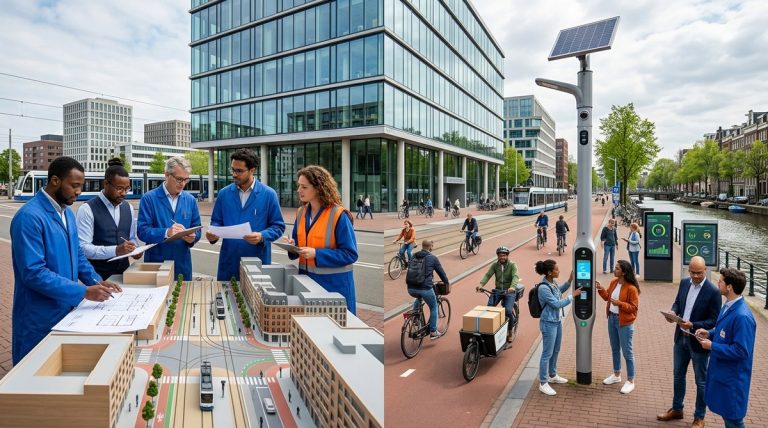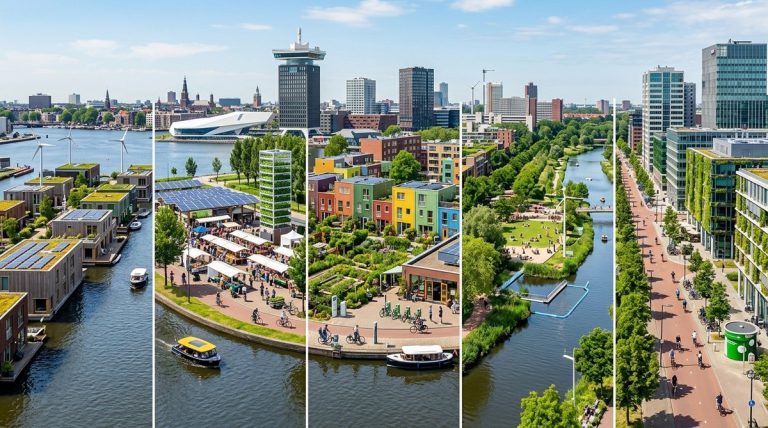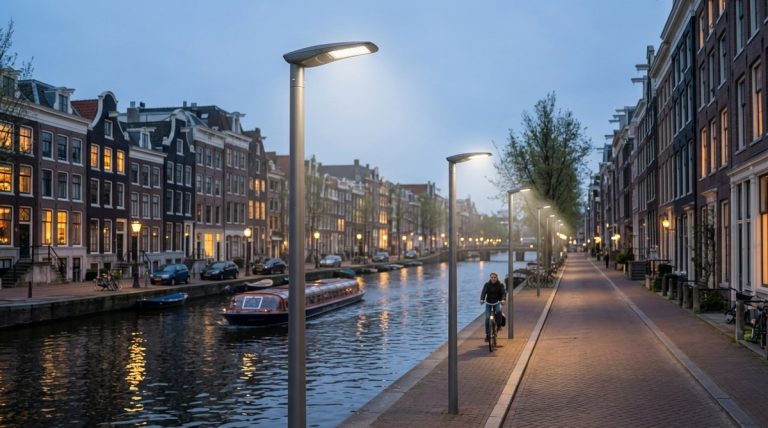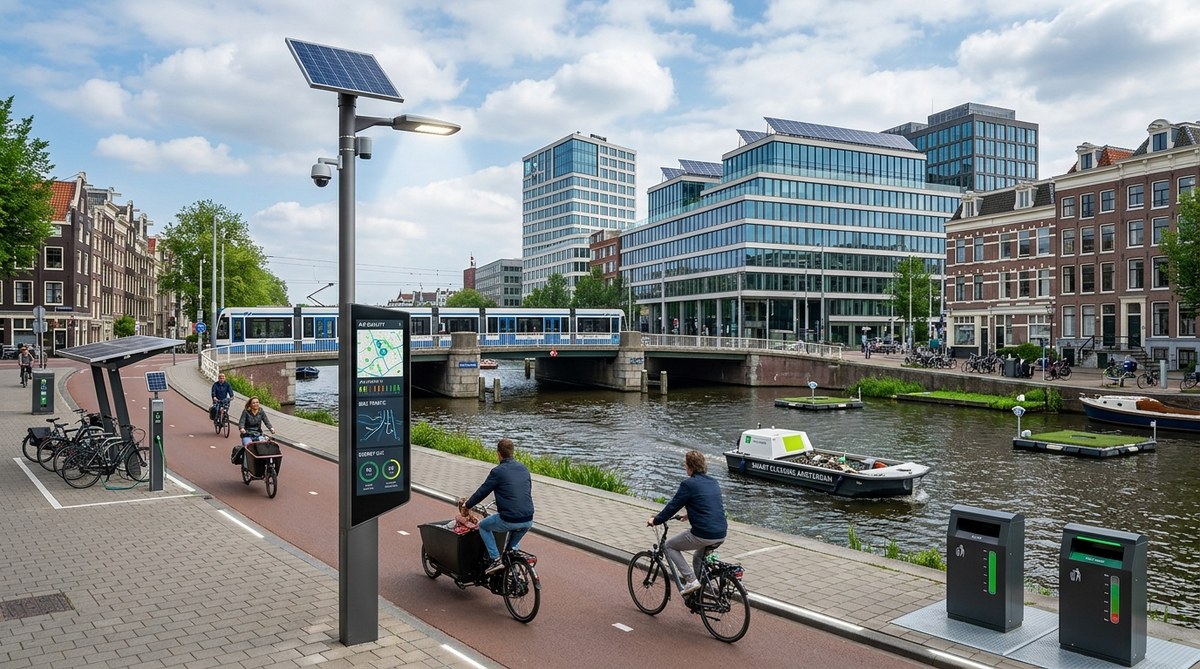
Amsterdam is transforming itself into a shining example of sustainable urban living. By integrating innovative technologies into its daily operations, the city is not only reducing its carbon footprint but also creating a more efficient, resilient, and inclusive environment. This approach showcases how a city can balance growth with sustainability, setting a global standard for future urban development.
Amsterdam’s smart city sustainability initiatives demonstrate how integrating digital tools, renewable energy, and citizen participation can create a more eco-friendly and efficient urban environment. The city’s approach offers valuable lessons for urban planners and policymakers worldwide eager to develop greener cities.
How Amsterdam is Leading in Smart City Sustainability
Amsterdam’s drive towards sustainability is rooted in its smart city initiatives that harness technology to address urban challenges. From energy management to mobility and waste reduction, the city’s strategy exemplifies a holistic approach to urban sustainability. The city’s commitment is evident in its ambitious plans, innovative projects, and strong collaboration between public and private sectors.
Implementing Smart Technologies for a Sustainable Future
Amsterdam’s smart city journey involves a series of deliberate steps that embed technology into its urban fabric. Here are the core processes that have helped shape its sustainability ambitions:
- Developing an integrated data platform – The city gathers real-time data from sensors, IoT devices, and citizens to inform decision-making and optimise resource use.
- Investing in renewable energy solutions – Solar panels, wind turbines, and smart grids form the backbone of the city’s clean energy infrastructure.
- Promoting sustainable mobility options – From electric buses to bike-sharing schemes, Amsterdam encourages eco-friendly transportation modes.
Practical steps for creating a sustainable smart city:
- Engage local communities early in planning processes to ensure projects meet actual needs.
- Prioritise infrastructure that supports renewable energy and energy efficiency.
- Use data analytics to identify inefficiencies and optimise resource distribution.
Key benefits of Amsterdam’s smart city approach include:
- Reduced greenhouse gas emissions
- Improved air quality
- Enhanced waste management
- Better traffic flow and mobility options
- Increased citizen participation
Techniques and common pitfalls in smart city projects
| Techniques | Mistakes to Avoid |
|---|---|
| Real-time sensor networks | Ignoring data privacy concerns |
| Smart grid energy management | Overlooking user engagement and feedback |
| Digital twin modelling | Underestimating infrastructure costs |
| Citizen involvement platforms | Failing to maintain and update tech systems |
“Integrating technology with urban planning is essential for creating sustainable cities. The key is balancing innovation with inclusivity and resilience,” advises Professor Emily Carter, a leader in urban sustainability from the University of London.
The Role of Renewable Energy in Amsterdam’s Sustainability Drive
Renewable energy forms the core of Amsterdam’s efforts to reduce its carbon footprint. The city has invested heavily in smart grid technologies that optimise energy distribution and incorporate renewable sources. Projects like City-Zen exemplify how smart grids can manage fluctuating energy supplies from solar and wind power efficiently.
Major renewable energy initiatives include:
- Solar panel installations on public buildings and private homes
- Wind farms located near the city
- Smart energy storage solutions to balance supply and demand
Benefits include:
- Lower energy costs for residents
- Increased energy security
- Contribution to national climate targets
Mobility and Transport: Making Green Travel the Norm
Transport remains one of the biggest sources of emissions in urban environments. Amsterdam tackles this by promoting electric vehicles, expanding cycling networks, and integrating mobility services through digital platforms.
Practical steps for sustainable mobility:
- Expand electric vehicle charging infrastructure
- Incentivise public transport use
- Invest in cycling infrastructure
- Use data to optimise traffic flow and reduce congestion
The city’s innovative projects:
- Electric bus fleets operating across the city
- Car-sharing schemes powered by renewable energy
- Real-time traffic management systems
Advantages for residents and visitors:
- Lower transport costs
- Reduced air pollution
- Healthier lifestyles through active travel options
Waste Management and Circular Economy
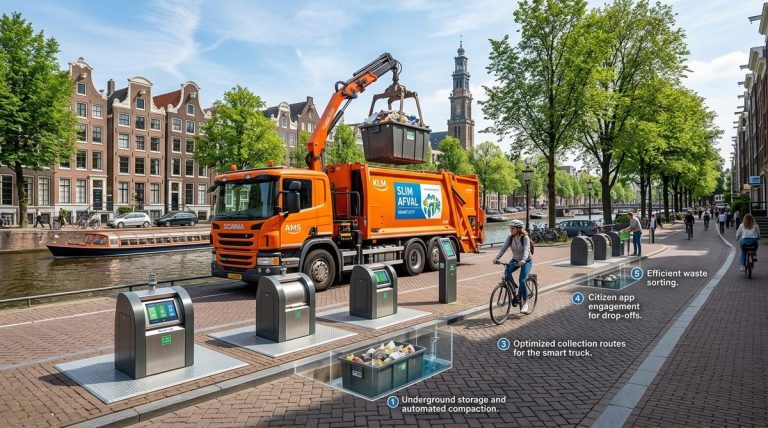
Smart waste management systems enable Amsterdam to reduce waste and increase recycling rates. Sensors in bins notify collection services when they are full, optimising collection routes and reducing fuel consumption.
Techniques used:
- IoT-enabled waste bins
- Incentivising circular economy practices
- Public awareness campaigns
Mistakes to avoid:
| Techniques | Mistakes to Avoid |
|---|---|
| Automated waste collection systems | Ignoring local behavioural patterns |
| Digital tracking of waste streams | Underfunding maintenance of new tech |
| Community engagement for recycling | Overlooking data security and privacy |
Citizen Participation and Digital Platforms
A crucial element of Amsterdam’s success lies in active citizen participation. The city uses digital platforms to encourage residents to contribute ideas, report issues, and participate in sustainability initiatives.
Examples include:
- Online forums for urban planning feedback
- Mobile apps for reporting issues
- Educational campaigns on sustainable living
Benefits:
- Increased transparency
- Better tailored services
- Greater community buy-in
Challenges and Future Outlook
Despite its achievements, Amsterdam faces ongoing challenges such as climate change impacts, growing population, and maintaining technological infrastructure. The city continuously adapts by updating its policies and investing in research.
Techniques and pitfalls to consider:
| Techniques | Mistakes to Avoid |
|---|---|
| Continuous innovation and review | Complacency in legacy systems |
| Cross-sector collaboration | Lack of clear governance structures |
| Data-driven policymaking | Privacy concerns and data misuse |
How to Apply These Lessons in Your City
Implementing smart city solutions requires a clear vision, stakeholder engagement, and a commitment to sustainability. Here are practical steps for urban planners and policymakers:
- Start by assessing your city’s specific needs and challenges.
- Foster partnerships between government, academia, and industry.
- Prioritise projects that deliver measurable environmental and social benefits.
- Invest in scalable and adaptable technologies.
- Keep citizens at the centre of your initiatives.
Building a Sustainable Urban Future
Amsterdam’s journey demonstrates that smart city sustainability is not a one-off project but an ongoing process of innovation and adaptation. By integrating digital technologies with inclusive planning, the city is shaping a model for greener, smarter urban living.
As urban areas worldwide face mounting pressures, adopting such an integrated approach can help create resilient and vibrant communities. Whether by harnessing renewable energy, improving mobility, or engaging citizens, the key lies in thoughtful application and continuous improvement.
Encourage your city to learn from Amsterdam’s example. Small steps, combined with bold ambitions, can lead to a more sustainable and liveable future for everyone.
About the Author