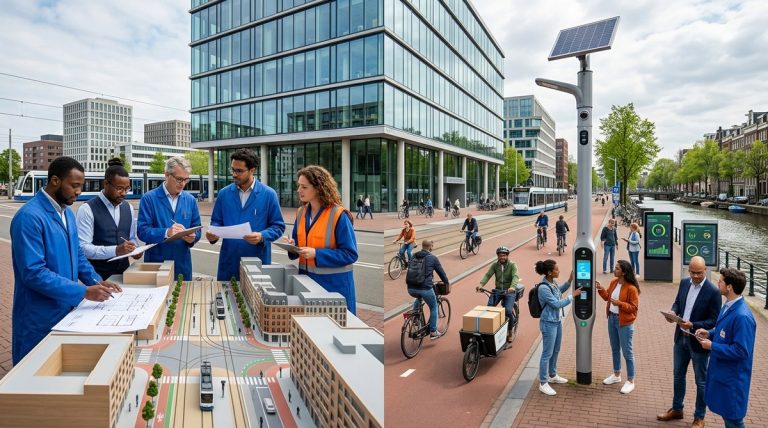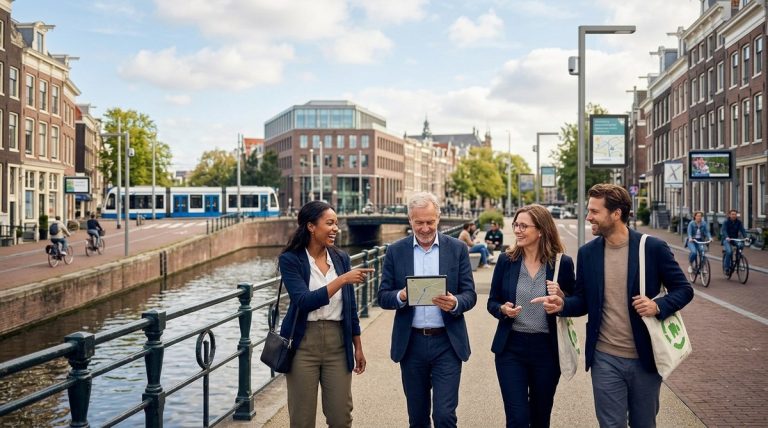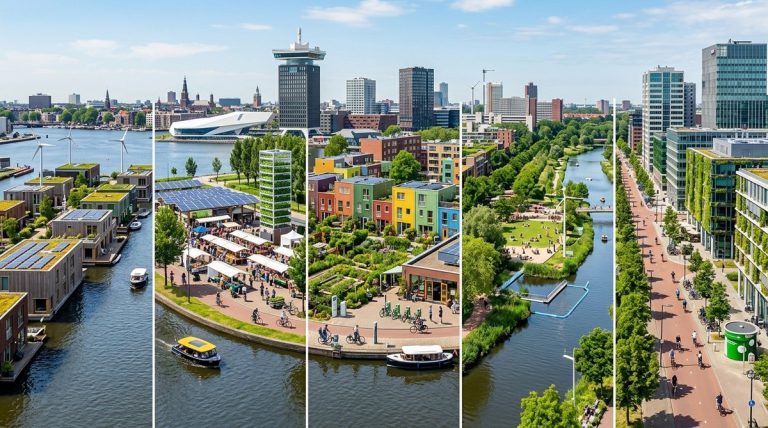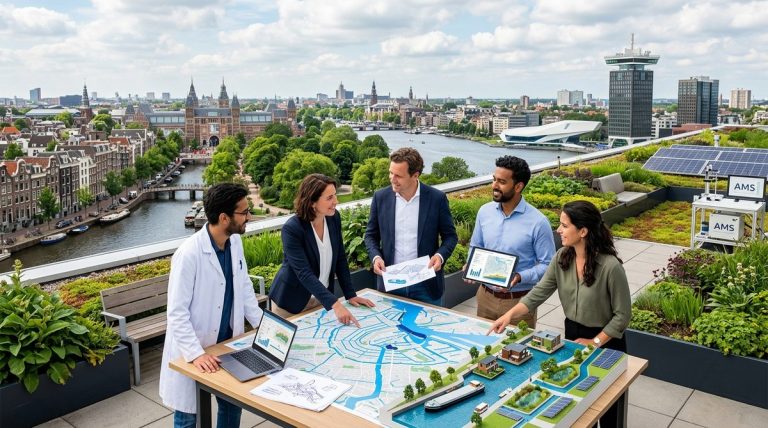
Amsterdam is a city built on water, trade, and a stubborn belief that collective action can solve almost anything. That same spirit is now driving its approach to climate adaptation. But here is the thing: no single organisation, not even the city council, can tackle rising water levels, heat stress, and biodiversity loss alone. The most promising solutions in Amsterdam are emerging where public agencies, private companies, research institutes, and local communities decide to work together. These are not polite, tick box partnerships. They are messy, ambitious, and genuinely redefining what a climate resilient city looks like in 2026.
Amsterdam climate adaptation collaborations work because they break traditional silos. By combining the resources of government, the agility of startups, the rigour of universities, and the lived experience of residents, the city is testing real world solutions for water management, green infrastructure, and circular building. These case studies offer a practical blueprint for any city facing similar climate pressures.
How cross-sector collaborations change the game
The standard approach to climate adaptation often follows a predictable path. A government agency writes a strategy. Consultants produce a report. Implementation stalls. Amsterdam is trying something different. Instead of handing down plans from on high, the city acts as a platform. It brings together unlikely partners and gives them space to experiment.
Take the example of the Amsterdam Climate Adaptation Summit in 2024. It was not a talking shop. The event directly led to five new multi sector working groups focused on specific neighbourhood challenges. These groups now meet monthly and include housing corporations, water authorities, tech startups, and resident associations. The result is a much faster feedback loop between policy and practice.
What makes these collaborations stick? Three things stand out.
- Shared risk. Partners agree to share the financial and reputational risk of pilot projects. This lowers the barrier for trying new ideas.
- Data transparency. All parties commit to open data standards. This builds trust and allows others to learn from failures, not just successes.
- Long term commitment. These are not one off projects. Partners sign up for multi year agreements with clear milestones and review points.
A good example of this model in action is the Resilient Noord initiative. In Amsterdam Noord, a partnership between the municipality, housing association Stadgenoot, and the local water board has transformed a flood prone area into a water resilient district. They replaced traditional paving with permeable surfaces, added rain gardens, and installed smart water storage systems under public squares. The project was co designed with residents through a series of neighbourhood workshops.
The mechanics of a successful partnership
Setting up a cross-sector collaboration sounds straightforward. In practice, it requires careful structuring. Based on the most effective examples in Amsterdam, here is a practical process that any urban planner or policy maker can follow.
- Identify the shared problem. Do not start with a solution. Start with a specific climate risk that affects multiple stakeholders. For example, surface water flooding in a particular postcode.
- Map the stakeholders. List every organisation that has a stake in that problem. Include unlikely ones like local businesses, schools, and cultural institutions.
- Define a concrete pilot. Agree on a small, measurable project that can show results within 12 months. This builds momentum and trust.
- Create a simple governance structure. Assign a neutral coordinator, set clear decision making rules, and establish a shared budget.
- Build in reflection points. Schedule regular reviews where partners can honestly assess what is working and what is not.
- Scale what works. Use the evidence from the pilot to attract additional funding and expand the project to other areas.
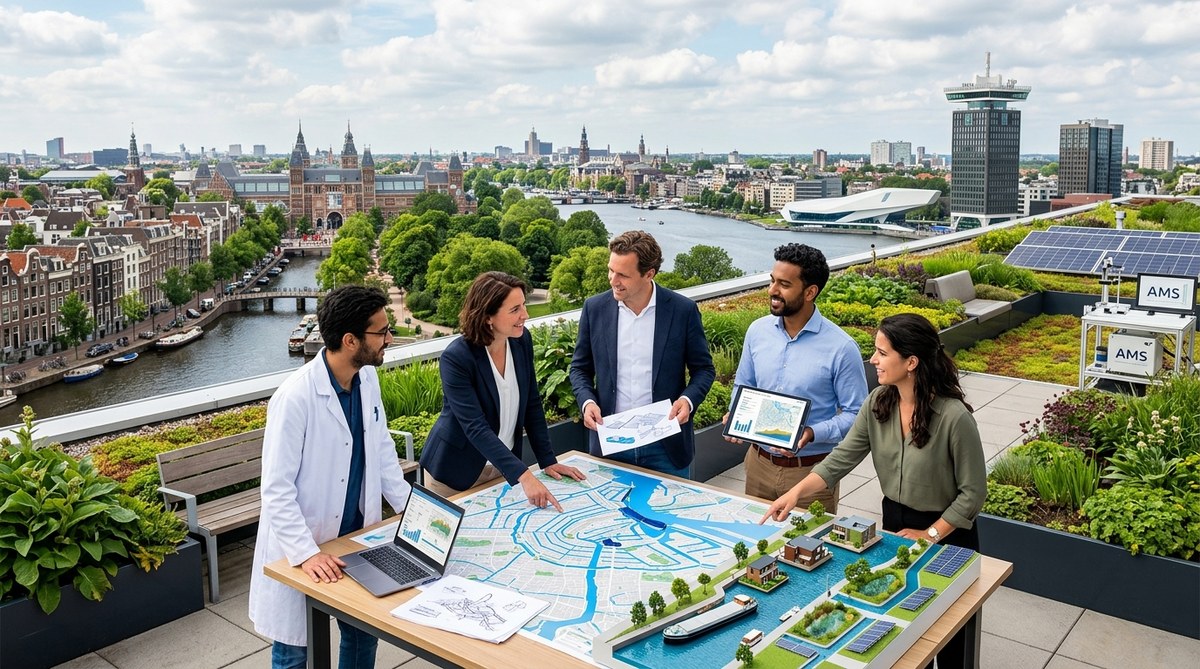
This process is not theoretical. It was used by the AMS Institute in their work on the Marineterrein, a former naval base turned living lab. There, researchers from TU Delft, the municipality, and local tech companies tested green roof systems and vertical gardens to reduce heat stress. The data from that pilot is now informing the city’s wider green infrastructure strategy.
Tools and techniques that make collaboration work
Different types of partnerships require different approaches. The table below outlines the most common collaboration models used in Amsterdam, along with their strengths and typical pitfalls.
| Collaboration type | Best suited for | Common mistake |
|---|---|---|
| Public private partnership (PPP) | Large infrastructure projects like water storage basins or energy grids | Underestimating the time needed for procurement and legal agreements |
| Living lab / testbed | Piloting new technologies in a real urban setting | Treating the lab as a showcase rather than a genuine learning environment |
| Community co design | Neighbourhood level interventions like rain gardens or park redesign | Failing to compensate residents for their time and expertise |
| Research consortium | Long term monitoring and data analysis | Publishing results in academic journals instead of sharing them with practitioners |
| Multi stakeholder taskforce | Policy development and agenda setting | Lack of a clear decision making process leads to endless meetings |
A common thread across all these models is the need for a dedicated facilitator. Someone whose job is not to represent a single organisation but to keep the partnership moving forward. The city of Amsterdam has started funding these roles explicitly, recognising that collaboration is a skill that needs to be resourced.
Lessons from the front line
What do the people running these partnerships actually say about the challenges? The feedback is remarkably consistent.
“The hardest part is not the technical solution. It is the governance. You have five organisations, each with their own budget cycles, legal teams, and performance metrics. Getting them to agree on a single timeline can take months. But once you have that alignment, the speed of execution is incredible.” — Programme lead, Amsterdam Rainproof
This quote captures a vital insight. Technical innovation in climate adaptation is advancing rapidly. Sensors, predictive models, and nature based solutions are all becoming more effective. The bottleneck is almost always organisational. How do you get a housing association, a water company, and a city department to move in the same direction?
Amsterdam’s answer has been to invest heavily in boundary spanners. These are people who understand the language of multiple sectors. They can translate between a water engineer, a community organiser, and a finance director. Several of the city’s most successful collaborations, including the Green Roofs Programme, were driven by a single boundary spanner who built relationships over several years.
A practical checklist for starting your own collaboration
If you are an urban planner or policy maker looking to set up a similar partnership in your own city, here are the key ingredients to get right from day one.
- A clearly defined climate challenge that no single organisation can solve alone
- A neutral convener with the authority to call meetings and mediate disagreements
- Shared data protocols so all partners can access the same information
- A small, ring fenced budget for the pilot phase
- A communications plan that celebrates early wins and shares lessons learned
- A formal agreement that outlines exit clauses and intellectual property rights
- A commitment to include community voices from the start, not as an afterthought
These elements are not optional extras. They are the structural conditions that allow trust to develop. Without them, even the most well intentioned partnership can collapse when the first disagreement arises.
Why Amsterdam keeps investing in this approach
The reason Amsterdam has doubled down on cross-sector collaborations is simple. It works. The city’s Resilience Strategy now explicitly mandates multi stakeholder delivery for every major climate project. This is not just a policy preference. It is a recognition that the complexity of climate adaptation demands a diversity of perspectives.
Consider the challenge of urban heat. A traditional approach might focus on planting more trees. A collaborative approach asks different questions. How can we use data from the health service to identify the most vulnerable residents? Can local businesses sponsor shaded rest areas? What do elderly residents in the neighbourhood actually need? The resulting solutions are more creative and more likely to be adopted by the community.
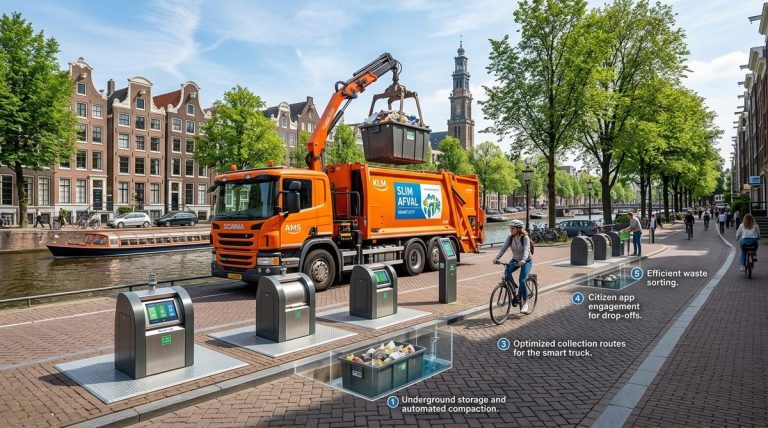
The same principle applies to water management. Amsterdam’s smart water management systems are not just engineering projects. They are partnerships between the water authority, digital infrastructure companies, and citizen scientists who monitor local canals and report blockages. This blend of high tech and high touch is what makes the city’s approach distinctive.
What this means for your work
The takeaway for anyone working in urban climate adaptation is clear. You do not need to wait for a perfect strategy document. You can start small, find a partner, and begin experimenting. The most advanced climate adaptation collaborations in Amsterdam began as informal conversations over coffee. They grew because someone was willing to share risk, share data, and share credit.
If you are based in the UK, there are direct lessons here. British cities face many of the same pressures: surface water flooding, overheating buildings, and aging drainage infrastructure. The lessons from Amsterdam’s smart city success are directly transferable. Find a neighbourhood, find a partner, and start small. The climate will not wait for perfect alignment.
Building a culture of shared resilience
Amsterdam climate adaptation collaborations are not just about technical fixes. They are about changing the culture of how a city solves problems. That shift takes time. It requires patience, humility, and a willingness to be wrong in public. But the evidence from the Dutch capital is clear. When you bring the right people together around a shared challenge, the results are greater than the sum of their parts.
So, what is the first step? Pick one climate risk in your city. Identify three organisations that have a real stake in that risk. Invite them for a conversation. Do not propose a solution. Just ask them what they see. That simple act of listening is where every successful collaboration begins. The rest is just follow through.
About the Author