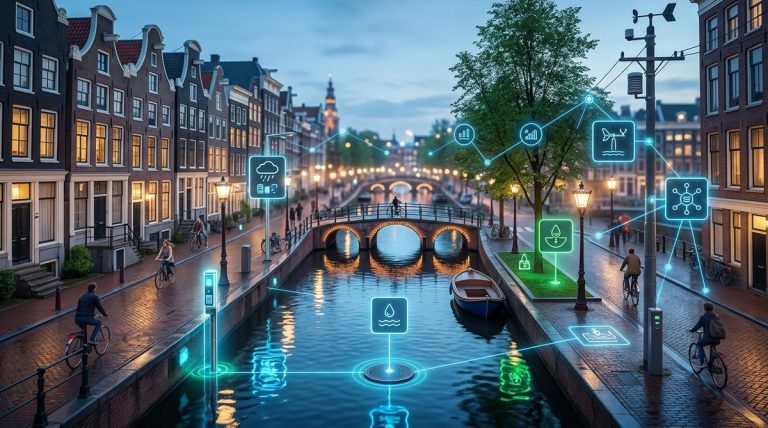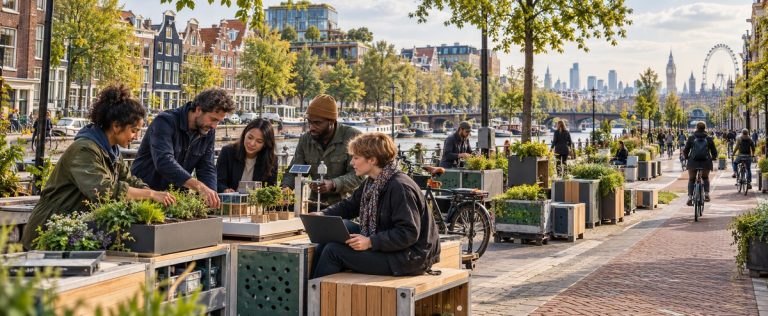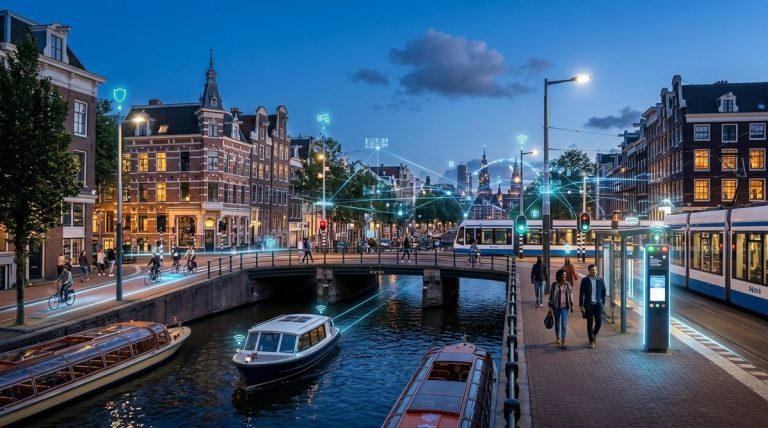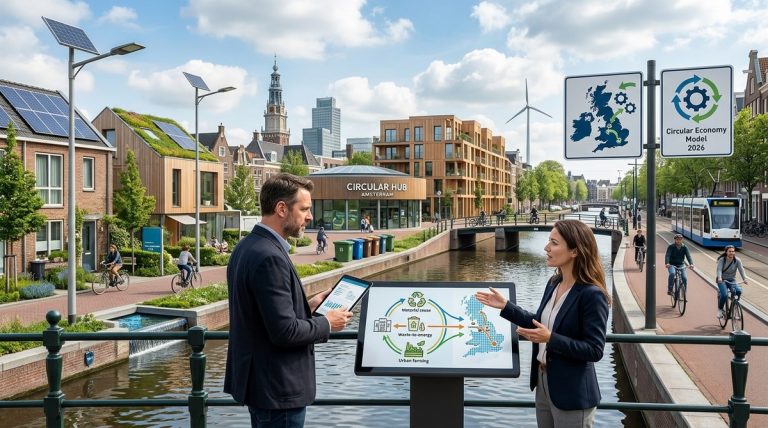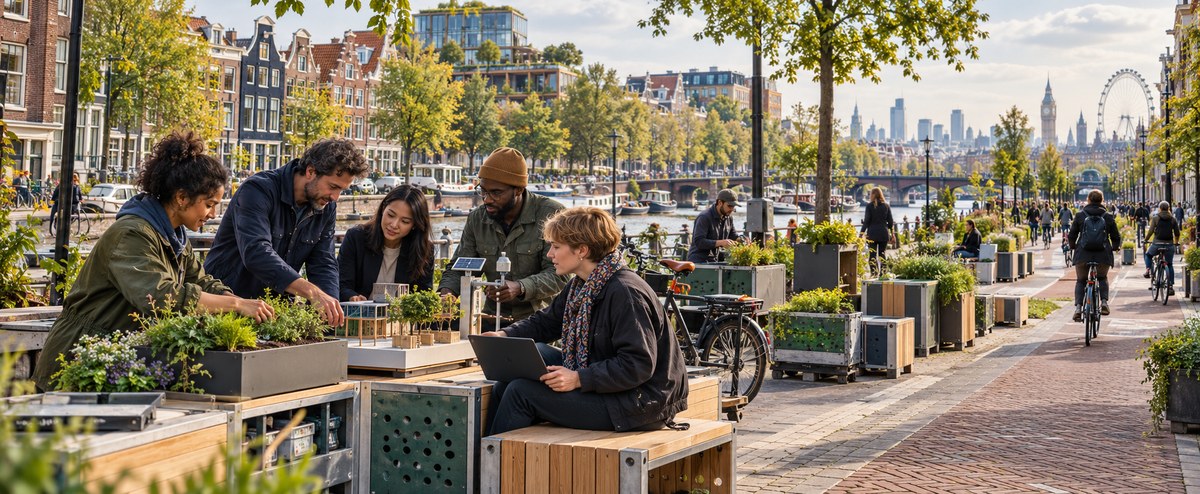
For years, council officers and innovation leads in the UK have watched Amsterdam with a mix of admiration and frustration. The Dutch capital seems to turn resident ideas into city-wide programmes with an ease that feels almost unfair. A neighbourhood group wants to redesign a junction? Amsterdam has a lab for that. A collective of parents wants to trial a car-free school street? There is already a tested framework to support them. The secret is not magic. It is a set of deliberate, repeatable structures that turn local energy into systemic change. And the best part is that these structures are entirely transferable to UK cities.
Amsterdam’s urban innovation labs succeed because they treat citizens as co-designers, not just consultees. UK cities can adopt this model by embedding flexible funding, neutral facilitation, and a clear pathway from pilot to policy. The result is faster adoption of grassroots ideas and stronger public trust in local government.
What makes an urban innovation lab different from a consultation
Traditional public engagement in the UK often follows a familiar pattern. A council publishes a document, holds a few evening meetings, and collects feedback. The process feels passive. Citizens respond to a plan that already exists. Amsterdam flips this approach completely.
An urban innovation lab is a physical or digital space where residents, civil servants, academics, and businesses work together on a shared challenge. The lab does not start with a solution. It starts with a question. For example, “How might we reduce food waste in the Jordaan district?” or “What would make the Oost neighbourhood safer for cyclists at night?” The lab provides the tools, the facilitation, and the small budget needed to test ideas in real time.
This model is already producing results in places like the Amsterdam Institute for Advanced Metropolitan Solutions (AMS), where citizen-led projects on air quality and green roofs have moved from prototypes to city-wide programmes. The key difference is ownership. When a resident helps design the solution, they also help champion it.
Three practical steps to build a citizen-led lab in a UK city
If you are an innovation officer in Manchester, Glasgow, or Bristol, you do not need a huge budget to start. Here is a process based on what works in Amsterdam.
-
Start with a hyper-local brief. Pick one street, one estate, or one park. Define a single, measurable challenge with the community. In Amsterdam, the Marineterrein living lab began with a simple question about energy use in a single block of flats. The scope was small, but the learning was deep.
-
Hire a neutral facilitator, not a consultant. The person running the lab must not come from the council or a private developer. They need to build trust. Amsterdam often uses local universities or independent co-design agencies for this role. The facilitator keeps the process fair and ensures quieter voices are heard.
-
Build a “fast fail” funding pot. Set aside a small amount of money that can be released within weeks, not months. In Amsterdam’s lab model, a resident group can receive up to €5,000 to test a prototype. If it fails, the learning is documented. If it works, the council scales it. This removes the usual barrier of waiting for a budget cycle.
These three steps create momentum. They also build a record of what works and what does not, which is invaluable for scaling.
Common mistakes UK councils make when trying to scale grassroots ideas
Even well-intentioned councils can trip up. The table below outlines the typical pitfalls and how Amsterdam’s labs avoid them.
| Mistake | What happens in UK practice | How Amsterdam labs prevent it |
|---|---|---|
| Over-promising on influence | Residents feel used when their ideas are ignored | Labs agree a “zone of influence” upfront, so everyone knows what is negotiable |
| Rigid funding rules | Small grants get stuck in procurement red tape | Labs use a dedicated innovation fund with a simple one-page application |
| Lack of political cover | Officers fear backing a pilot that might fail | Labs are framed as experiments; failure is celebrated as learning |
| Short time horizons | Projects end when the funding year ends | Labs run on rolling 12-month cycles, with a clear pathway to mainstreaming |
| No data feedback loop | Results sit in a PDF, not in city systems | Labs feed findings directly into the city’s digital twin and open data portal |
Why Amsterdam’s labs feel more like a movement than a programme
Walk into a lab session in Amsterdam and you will notice something unusual. The energy is not top-down. It is horizontal. Residents speak to civil servants as equals. A retired teacher might be debating traffic flow with a traffic engineer. That sense of shared purpose is not accidental. It is designed.
Amsterdam invests heavily in the social infrastructure of participation. This includes training for “citizen hosts” who run their own workshops, and a digital platform where every lab experiment is logged and searchable. The city treats participation as a skill to be nurtured, not a box to be ticked.
“The real value of a living lab is not the prototype. It is the trust that is built between the city and its citizens during the process. That trust becomes the foundation for every future project.” — Tineke van der Waal, former programme manager at Amsterdam Smart City
UK cities can replicate this by investing in long-term relationships, not just short-term projects. A lab that runs for three years will achieve far more than three separate one-year pilots.
Building a scaling pathway from pilot to policy
The biggest challenge for any UK city is moving a successful lab experiment into mainstream council operations. Amsterdam has a clear ladder for this.
- Stage one: Experiment. A small group tests an idea in one location. Funding is minimal. The goal is learning.
- Stage two: Validate. If the idea works, the lab runs it in two or three more locations. Data is collected. Costs are measured.
- Stage three: Standardise. The city’s policy team adopts the model as a standard offer. It becomes part of a budget line or a service contract.
- Stage four: Embed. The approach is written into the city’s spatial or sustainability strategy. It is no longer a pilot. It is just how the city does things.
This pathway works because it is transparent. Everyone involved knows what success looks like at each step. It also protects officers. If a pilot fails at stage one, that is fine. The system expects it.
What UK cities can learn from Amsterdam’s open data culture
A lab is only as good as the information it uses. Amsterdam’s labs are built on a foundation of open data. Air quality readings, traffic counts, energy use, and even citizen feedback are published in real time. This allows residents to design solutions based on facts, not assumptions.
UK cities often hold data too close. They worry about privacy or misinterpretation. Amsterdam shows that with the right safeguards, open data builds trust. When a resident can see the same pollution map as the council officer, the conversation changes. It becomes about what to do, not about who is hiding what.
For a deeper look at how Amsterdam uses data to shape policy, see our piece on the role of data and AI in transforming urban policy in Amsterdam.
How to get started tomorrow
You do not need a special budget or political permission to begin. The first step is the simplest one.
- Pick a local challenge that already has some energy behind it. A residents’ association that wants to green a car park. A school that wants a safe walking route. A market that wants less plastic waste.
- Invite three or four people from that group to a coffee meeting. Listen more than you talk.
- Offer one small thing: a room to meet in, a data set to use, or a small grant of a few hundred pounds.
- Document everything. Write down what was tried, what was learned, and what the group wants to do next.
That is the seed of a citizen-led urban innovation lab. It does not need a fancy name or a logo. It just needs a clear purpose and a willingness to share power.
The quiet revolution in how cities and citizens work together
Amsterdam’s approach is not about technology. It is about relationships. The smart sensors, the digital twins, and the open data platforms are tools, not the goal. The goal is a city where anyone can shape their environment. That is a powerful idea for UK cities facing tight budgets and low trust in public institutions.
If you want to see how this model is evolving in 2026, take a look at how Amsterdam is rewriting the rules of urban co-creation. The principles are simple but they require courage from local government. The reward is a city that feels like it belongs to the people who live in it.
Start small. Share the learning. Let the citizens lead. That is the lesson from Amsterdam, and it is one that every UK city can put into practice starting this week.
About the Author