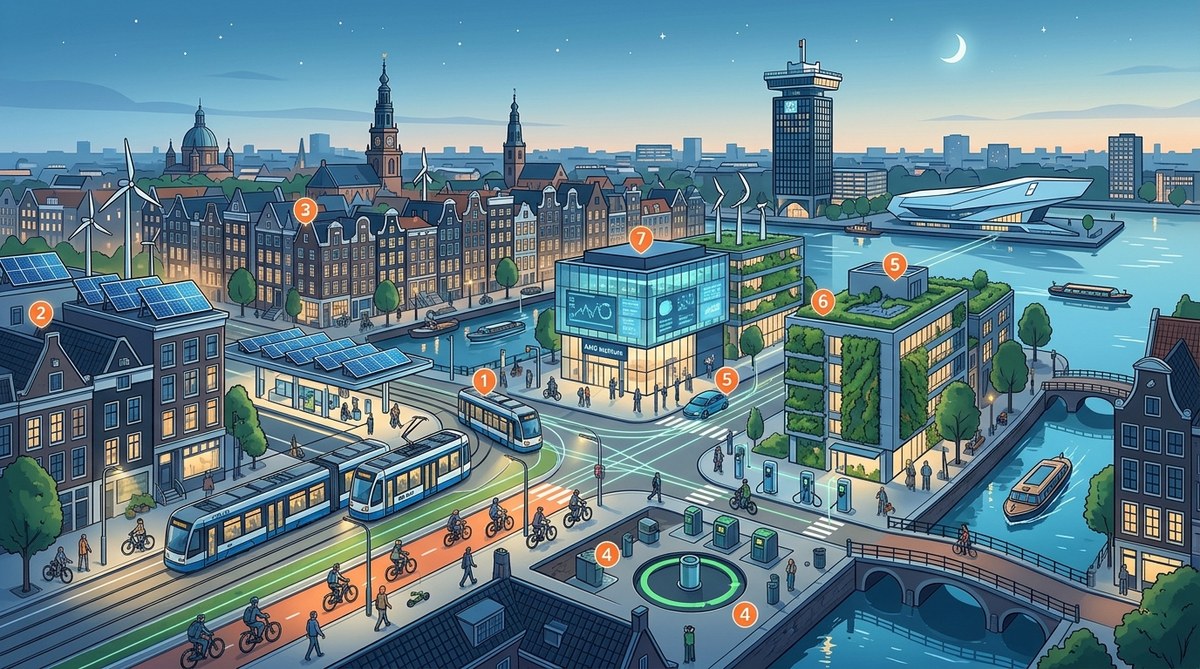
Amsterdam has a reputation for pragmatism. The Dutch capital does not just talk about sustainability targets. It builds systems that deliver measurable results. Right now, across the city, a network of smart technologies is quietly reducing carbon emissions. These are not pilot projects hidden in labs. They are live, operational, and scaling up. For urban planners and sustainability officers looking for proof that smart city investments pay off, Amsterdam offers a living case study. The innovations range from intelligent traffic management to waste collection that thinks for itself. Each one contributes to the city’s goal of cutting CO2 by 55% by 2030. Here is how they are doing it.
Amsterdam’s approach to cutting carbon emissions proves that smart city technology works best when it solves everyday problems. The city combines IoT sensors, open data platforms, and citizen participation to reduce energy use, improve traffic flow, and manage waste. These seven innovations show how urban planners can apply similar strategies in their own cities.
The Smart Grid That Learns Your Neighbourhood
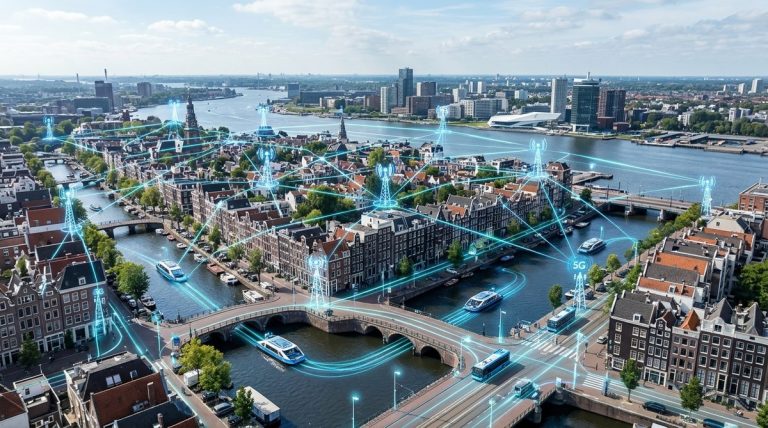
Amsterdam’s energy network is no longer a one-way street. The city has rolled out smart grids in several districts, including Nieuw-West and Zuidoost. These grids use sensors to monitor energy consumption in real time. When demand spikes, the system automatically balances loads across neighbourhoods. Solar panels on residential roofs feed excess power back into the grid, and the system stores it for later use.
The impact on carbon emissions is clear. Homes connected to the smart grid have reduced their energy waste by an average of 15%. The technology also helps the city avoid firing up gas-powered peaker plants during peak hours. For a sustainability officer, this is a textbook example of how digital infrastructure can decarbonise a legacy energy system. You can read more about how this works in our article on how Amsterdam is using smart grids to decarbonise its energy system.
Intelligent Traffic Lights That Cut Idling Time
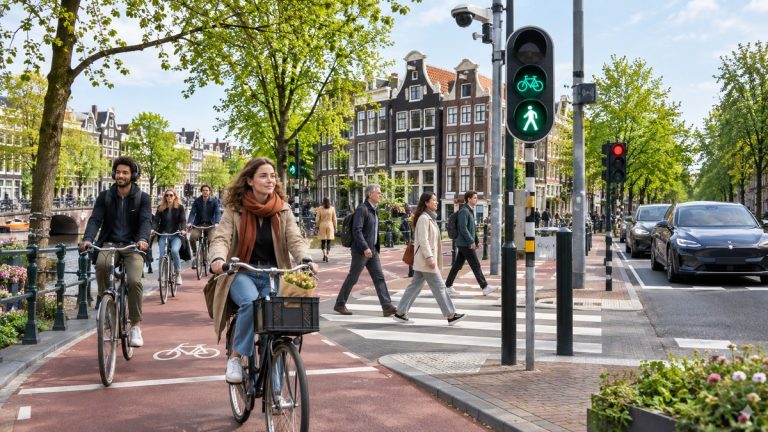
Traffic jams are not just frustrating. They are a major source of CO2. Amsterdam has installed adaptive traffic lights at over 200 intersections. These lights use cameras and inductive loop sensors to detect the volume of cars, bikes, and pedestrians. The system adjusts signal timing on the fly to keep traffic moving.
The results are impressive. Idling time has dropped by 20% in test areas. Less idling means less fuel burned. The city estimates this single intervention has reduced transport-related carbon emissions by several thousand tonnes per year. Urban planners looking for a low-cost, high-impact project should take note. For more on how data drives these decisions, see our piece on the role of data and AI in transforming urban policy in Amsterdam.
Smart Waste Bins That Tell You When They Are Full
Amsterdam’s waste collection used to run on a fixed schedule. Trucks drove every route regardless of whether bins were full or empty. That changed with the introduction of smart waste bins. These bins are fitted with ultrasonic sensors that measure fill levels. When a bin reaches 80% capacity, it sends an alert to the central waste management platform.
The benefits are twofold. First, collection routes are optimised in real time, reducing fuel consumption. Second, overflowing bins are now rare, which keeps streets cleaner. The city has cut its waste collection vehicle mileage by 30% in areas using the system. That translates directly into lower carbon emissions. For a closer look at how this system works, check out our guide on 5 ways Amsterdam’s smart waste management system is revolutionising city cleanliness.
Digital Twin of the Entire City
Amsterdam has built a digital twin, a virtual replica of the city that updates in real time. This model pulls data from thousands of sensors, weather stations, and traffic cameras. Urban planners use it to simulate the impact of new developments, traffic schemes, or green infrastructure before breaking ground.
The carbon reduction comes from better decision making. For example, the digital twin helped the city identify optimal locations for new cycle lanes and green roofs. It also models heat islands and suggests where to plant trees for maximum cooling effect. This reduces the need for energy-intensive air conditioning in summer. You can learn more in our article on how Amsterdam’s digital twins are revolutionising urban decision-making in 2026.
Energy Positive Neighbourhoods
Some districts in Amsterdam now produce more energy than they consume. The most famous example is the neighbourhood of Buiksloterham. It was built using circular economy principles. Homes are fitted with solar panels, heat pumps, and smart ventilation systems. The entire area is connected to a local energy grid that shares power between buildings.
During sunny days, excess electricity is stored in communal batteries. On cloudy days, the neighbourhood draws from that stored energy. The result is a net positive energy balance. Carbon emissions from these homes are near zero. For planners, this model shows that new developments can be designed to eliminate operational carbon from day one. See how this fits into the bigger picture in our article on how Amsterdam’s smart energy districts are cutting carbon faster than national targets.
Street Lighting That Dims Itself
Amsterdam has replaced over 40,000 streetlights with LED fixtures that are connected to a central management system. These lights are not just more efficient. They are intelligent. Each light can dim itself based on the time of night, the presence of pedestrians, or the phase of the moon.
If a motion sensor detects a cyclist approaching, the lights brighten. Once the cyclist passes, they dim again. This has cut the city’s street lighting energy use by 60%. The carbon savings are significant, and residents report feeling safer because the lights respond to movement. For a more detailed breakdown, read our article on how Amsterdam is using smart street lighting to cut costs and carbon emissions.
Open Data Platform That Powers Citizen Innovation
Amsterdam’s open data portal gives citizens and startups access to hundreds of datasets. These include air quality readings, traffic flows, energy use, and waste collection data. The city encourages people to build their own applications using this data.
One startup used the data to create an app that helps delivery companies plan the most fuel-efficient routes. Another group of residents used air quality data to campaign for a low emission zone in their neighbourhood. The city does not control these innovations. It simply provides the raw material. This model has proven to be a low-cost way to generate new carbon cutting ideas. For more on how citizen participation drives change, see our article on the role of citizen engagement in shaping Amsterdam’s smart city initiatives.
A Simple Framework for Planning Your Own Smart City Carbon Strategy
If you are an urban planner or sustainability officer, you do not need to copy Amsterdam exactly. But you can follow the same logic. Here is a numbered list of steps to get started:
- Audit your existing infrastructure. Look for systems that already have sensors or digital controls. Streetlights, traffic signals, and waste bins are good starting points.
- Identify the biggest carbon sources in your city. Transport, buildings, and waste are usually the top three. Focus your smart city investments where they will have the most impact.
- Start with a small pilot. Choose one neighbourhood or one street. Test the technology, measure the results, and learn from mistakes before scaling up.
- Make your data open. Share sensor readings and performance data with citizens and startups. You will be surprised at the solutions they create.
- Track and report progress. Use a public dashboard to show real time carbon savings. This builds trust and keeps politicians engaged.
Common Mistakes to Avoid When Implementing Smart City Carbon Initiatives
Even the best projects can fail if you overlook the basics. Here is a table of common mistakes and how Amsterdam avoids them.
| Mistake | Why It Hurts Carbon Reduction | How Amsterdam Handles It |
|---|---|---|
| Buying tech without a clear problem | Wastes budget and delays real savings | Start with a specific need, like reducing idling traffic |
| Ignoring citizen privacy | Erodes public trust and stalls projects | Publish a clear data ethics charter for every sensor |
| Scaling too fast | Small problems become big failures | Run pilots for at least one year before expanding |
| Keeping data locked away | Misses out on community innovation | Open data portal with hundreds of free datasets |
| Forgetting maintenance | Sensors break and systems degrade | Dedicated team monitors sensor health weekly |
What Urban Planners Can Learn from Amsterdam’s Approach
Amsterdam’s success comes from a few core principles. They are worth repeating because they apply to any city.
“The technology is not the hard part. The hard part is getting the governance right. You need a team that can work across departments, a budget that allows for experimentation, and a mayor who is willing to let some projects fail.” — Senior Advisor, Amsterdam Smart City Office
This quote captures the essence of Amsterdam’s strategy. The city treats smart city innovation as a team sport. It involves the water authority, the energy company, the transport department, and citizen groups. No single organisation owns the problem. They share the responsibility and the credit.
For UK cities, this model offers a clear lesson. Do not wait for a central government mandate. Start with what you have. Many British councils already manage streetlights, waste collection, and traffic signals. Adding sensors to those systems is not expensive. The payoff in carbon reduction is real.
To see how these ideas translate to the British context, read our article on what can UK cities learn from Amsterdam’s smart city success.
How Amsterdam Measures Success and Holds Itself Accountable
Amsterdam does not just install sensors and hope for the best. It tracks performance against clear targets. The city publishes an annual smart city report that includes carbon reduction figures for each initiative.
Here are the key metrics they use:
- Tonnes of CO2 avoided per project
- Percentage reduction in energy use for street lighting and buildings
- Reduction in vehicle miles for waste collection and municipal fleets
- Citizen satisfaction scores for smart city services
- Number of active data users on the open data platform
These metrics keep the programme honest. If a project is not delivering carbon savings, it gets redesigned or stopped. This discipline is essential for maintaining political support and budget.
For a deeper look at how Amsterdam measures impact, see our article on 5 key performance indicators Amsterdam uses to measure smart city success.
The Path Forward for Your City in 2026
Amsterdam’s smart city innovations are not magic. They are the result of steady, focused work over many years. The city did not try to solve everything at once. It picked a few high impact areas, tested solutions, and scaled what worked. The carbon reductions are real, and they are growing every year.
If you are reading this as an urban planner, a sustainability officer, or a smart city researcher, the message is simple. You do not need a massive budget or a team of data scientists. You need a willingness to start small, measure honestly, and share what you learn. Amsterdam has shown that the path to lower carbon emissions runs through smarter, more connected infrastructure. The tools are available. The playbook exists. The only question is whether your city is ready to use it.
Take a look at one of the projects mentioned here. Visit the Amsterdam open data portal. Read a case study. Then pick one street, one neighbourhood, or one system in your city and start the process. That is how real change begins.
About the Author