Amsterdam is on track to cut its CO2 emissions by 55% before 2030. That is not a vague ambition. It is a target backed by a powerful tool: the smart grid. While many cities talk about sustainability, Amsterdam has built an energy system that talks back. It listens, adjusts, and learns from the way people actually use power. The result is a city wide network that balances renewable generation with real time demand, without asking residents to sacrifice comfort. For anyone working in urban planning or energy policy, this is not just interesting. It is instructive.
Amsterdam’s smart grid strategy combines digital sensors, real time data, and community participation to balance energy supply and demand. The system integrates solar panels, heat pumps, and electric vehicle chargers without overloading local networks. For planners and policy researchers, this model shows how decentralised energy management can reduce carbon emissions. It is a replicable blueprint for cities targeting net zero. Pilot areas already show measurable reductions, and over 70 partners now support the smart network.
The Energy Challenge Amsterdam Faced
Amsterdam’s old electricity grid was built for a simpler time. Power flowed one way from central plants to homes and businesses. That design works fine when demand is predictable and supply is steady. But it struggles when thousands of households install solar panels, plug in electric cars, and switch to heat pumps. These changes create two problems at once. Local generation spikes during sunny afternoons, while demand surges in the early evening when people come home and charge their vehicles.
The city’s network operators faced a classic urban dilemma. Upgrading every cable and substation would cost billions and take decades. Doing nothing would lead to blackouts and stalled decarbonisation targets. Amsterdam needed a third option. That option was the smart grid.
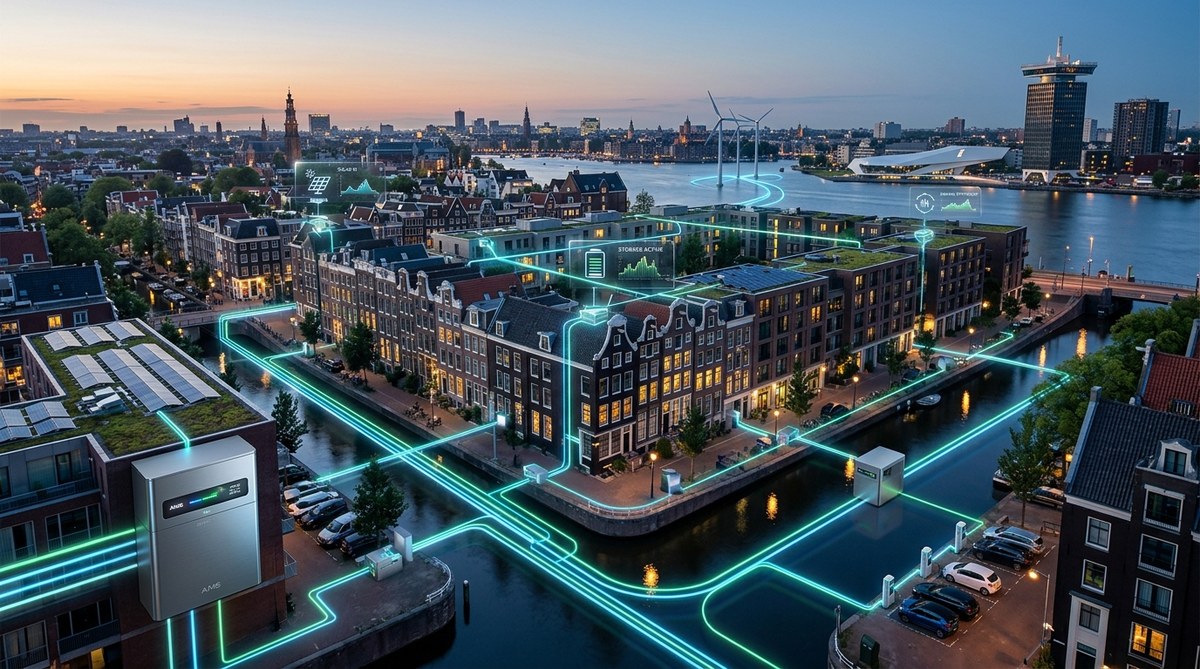
A smart grid does not replace the physical cables. It adds a layer of intelligence on top of them. Digital meters, sensors, and automated switches let the system monitor conditions in real time and reroute power where it is needed most. When a neighbourhood produces more solar energy than it can use, the grid can store that surplus in community batteries or send it to a nearby district. When demand spikes, the grid can ask participating households to delay their EV charging by an hour. The result is a system that does more with less.
How a Smart Grid Changes the Game
The core idea sounds simple, but the execution is complex. Amsterdam’s approach rests on three practical steps that other cities can adapt to their own context.
Three Steps to a Smarter Grid
1. Install digital sensors and smart meters at every node.
Amsterdam started by equipping homes, businesses, and substations with smart meters that report usage every 15 minutes. This granular data reveals patterns that analogue meters miss. For example, the city discovered that many neighbourhoods produce peak solar energy between 11am and 2pm, but peak demand hits around 6pm. That gap creates a classic duck curve problem. With smart meters, operators can predict when and where congestion will happen and take action before fuses blow.
2. Build local energy storage and automated controls.
Data alone is not enough. Amsterdam invested in community scale batteries that soak up surplus solar power during the day and release it in the evening. The city also deployed automated switches that can isolate parts of the grid during maintenance or faults. These switches operate in milliseconds, much faster than a human crew could respond. They keep the network stable even when renewable generation fluctuates.
3. Create incentives for households to shift their usage.
The smartest part of Amsterdam’s grid might be the way it treats people as partners, not just consumers. Households that allow the operator to delay their EV charging or heat pump cycling receive a discount on their energy bill. The city runs a Flexpower programme that adjusts charging speeds for public EV stations based on overall grid load. During busy periods, chargers slow down. During low demand windows, they speed up. Participation is voluntary, but the savings make it popular.
These three steps form a loop. Sensors collect data. Automation acts on it. People benefit from the results. Each step reinforces the others.
Projects That Show the Model Works
Amsterdam’s smart grid is not a theoretical exercise. Several real world projects demonstrate its effectiveness in different settings.
-
City Zen project in Nieuw West. This was one of Europe’s first large scale smart grid pilots. It connected 300 homes, a school, and a sports centre to a shared energy system. The project reduced peak demand by 13% and gave residents direct feedback on their consumption through an app.
-
Schoonschip floating neighbourhood. This community of 46 houseboats on Johan van Hasseltkade operates its own mini grid. Each home has solar panels and a battery. The houses trade energy between themselves before drawing from the main grid. It is the most advanced residential smart grid in the world.
-
Amsterdam ArenA stadium. The home of Ajax now hosts a second life battery system made from reused EV batteries. The batteries store solar energy generated on the stadium roof and supply power during events. The system also provides grid balancing services to the local operator.
-
Flexpower Amsterdam. This initiative manages over 400 public charging points for electric vehicles. Charging speeds adjust dynamically based on grid conditions. Drivers pay less when they charge during off peak hours. The programme has helped avoid upgrades to several local substations.
Each project proves a different part of the concept. Together they show that smart grids work across residential, commercial, and mixed use settings.
Smart Grid Approaches Compared
Not all smart grid strategies produce the same results. Amsterdam’s choices differ from those made by other cities. The table below compares four common approaches and their outcomes.
| Approach | How It Works | Common Mistake | Amsterdam’s Variation |
|---|---|---|---|
| Centralised control | One operator manages all assets from a single hub | Creates a single point of failure and ignores local data | Uses distributed sensors and edge computing for faster response |
| Mandatory demand shifting | Utility forces households to reduce usage during peaks | Causes backlash and low compliance | Offers financial incentives and keeps participation voluntary |
| Hardware first investment | Replaces all cables and transformers before adding software | Wastes capital on upgrades that may not be needed | Adds digital controls first, then upgrades only where data shows congestion |
| Standalone pilot projects | Tests smart grid in one neighbourhood without citywide coordination | Creates isolated solutions that do not scale | Connects pilots through a shared data platform and common standards |
The pattern is clear. Amsterdam succeeds because it balances technology with human behaviour. It does not force change. It makes change attractive.
What City Planners Can Learn
The Amsterdam experience offers lessons that apply far beyond the Netherlands. Urban planners and policy researchers should note a few key principles.
“The biggest mistake cities make is treating the grid as a purely technical problem. It is a social system as much as an electrical one. Amsterdam succeeded because it involved residents from day one, gave them clear benefits, and made participation easy. If you design only for the hardware, you miss the human factor.”
- Dr. Martine van der Veen, urban energy researcher at the Amsterdam Institute for Advanced Metropolitan Solutions
That quote captures the heart of the matter. Technology matters, but trust matters more. Amsterdam built trust by being transparent about data use, offering real savings, and letting people opt in rather than forcing them.
For cities that want to follow Amsterdam’s lead, the steps are clear. Start with a pilot in a neighbourhood that has high solar adoption or EV ownership. Use that pilot to test both the technology and the engagement model. Measure results carefully and share them publicly. Then expand gradually, connecting each new district to the same data platform.
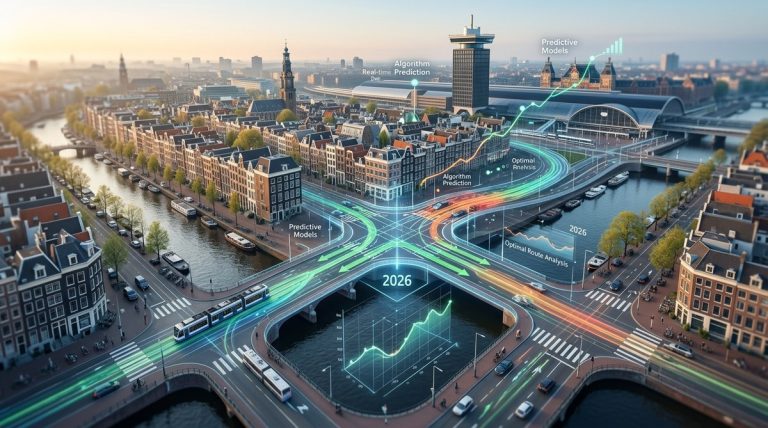
One area where Amsterdam continues to lead is the use of artificial intelligence to forecast demand. The city now uses machine learning models that predict grid load up to 24 hours ahead based on weather forecasts, holiday schedules, and historical patterns. These predictions help operators schedule maintenance, manage storage, and set dynamic pricing. If you want to see how this works in more detail, read about how data and AI transform urban policy in Amsterdam.
Building on Amsterdam’s Progress
The smart grid is just one piece of Amsterdam’s broader sustainability puzzle. The city has also invested in green roofs, district heating networks, circular water systems, and pedestrian friendly street design. All of these elements connect through a shared digital backbone that coordinates energy, transport, and waste management.
For example, the same sensors that monitor grid load can also track air quality and traffic flow. The city uses this combined data to decide where to plant trees, where to install bike lanes, and where to add EV charging points. This integrated approach is the subject of a broader case study on how Amsterdam uses smart technologies to create a more sustainable city.
Looking ahead to the rest of 2026, Amsterdam is testing vehicle to grid technology that lets EV batteries send power back to homes during peak hours. If that pilot succeeds, every electric car could become a mobile power bank for its neighbourhood. That would change the economics of grid storage entirely.
Another promising development is the use of blockchain for peer to peer energy trading. Residents in the Schoonschip neighbourhood already trade solar credits between households. The city is now exploring whether blockchain can scale that model to entire districts. You can follow the latest developments in innovative urban solutions shaping Amsterdam’s future in 2026.
For cities still planning their own smart grid strategy, the most important takeaway is this: start small, measure everything, and put people at the centre. Amsterdam did not build its smart grid in a year. It took a decade of pilots, failures, and adjustments. But each step made the next one easier.
Mapping Your Own Path to a Smarter Grid
Amsterdam’s story is not just about Dutch canals and bike lanes. It is about a city that refused to accept that decarbonisation had to wait for a grid upgrade. By using data, automation, and community engagement, Amsterdam found a way to reduce emissions faster and cheaper than a traditional approach would allow.
For urban planners and sustainability professionals, the message is encouraging. You do not need unlimited budgets or a blank slate. You need a clear starting point, a willingness to experiment, and a focus on the people who will use the system every day.
The smart grid model that works in Amsterdam can work in Manchester, Bristol, or Glasgow. The technology is proven. The business case is solid. The only missing ingredient is the decision to begin. If you are ready to take the next step, take a look at top strategies for implementing smart city technologies in Amsterdam for a practical checklist that can help you get started.
The energy transition is happening. Amsterdam is showing that smart grids can make it happen sooner, with less disruption, and with more benefits for the people who call the city home. That is a blueprint worth copying.
About the Author