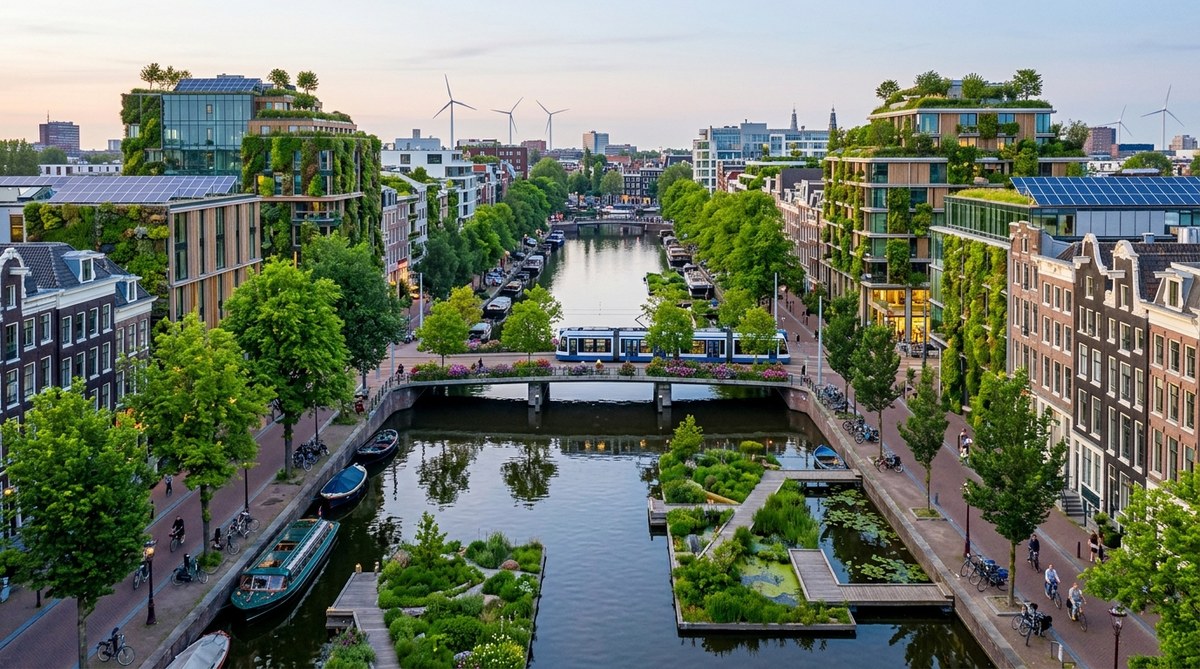
Urban life in Amsterdam is transforming rapidly, driven by ambitious green infrastructure strategies designed to tackle climate change and urban growth. As the city’s canals and historic streets blend with cutting-edge sustainability initiatives, Amsterdam stands as a shining example of innovative urban planning. From flood resilience to biodiversity enhancement, its strategies are shaping a cleaner, healthier, and more adaptable city for residents and visitors alike.
Understanding Amsterdam’s Green Infrastructure Approach
Amsterdam’s commitment to sustainability is embedded in its urban fabric. Green infrastructure involves integrating natural systems into city planning to create multifunctional spaces that support environmental, social, and economic goals. The city’s approach combines parks, green roofs, waterways, and urban forests to foster climate resilience and improve residents’ quality of life.
This holistic strategy aims to manage water, reduce heat, and preserve biodiversity, all while enhancing urban aesthetics. The city’s policies are rooted in community engagement and scientific research, ensuring that green initiatives meet local needs and global standards.
Key Elements of Amsterdam’s Green Infrastructure Strategies
Amsterdam employs a variety of techniques to embed nature into its urban environment. These include:
- Blue-green corridors that connect parks and water bodies, allowing wildlife movement and flood control.
- Green roofs and walls that cool buildings and reduce urban heat islands.
- Permeable pavements that facilitate rainwater absorption.
- Urban wetlands that act as natural water filters and flood buffers.
- Biodiversity hotspots created through planting native species and restoring natural habitats.
Each element plays a vital role in building resilience against climate change and enhancing urban sustainability.
Practical steps in implementing green infrastructure
- Assessment and mapping of existing natural features and vulnerabilities.
- Community involvement to identify priorities and foster support.
- Design and planning of green spaces and water management systems.
- Construction and integration into existing urban fabric.
- Monitoring and maintenance to ensure long-term effectiveness.
Benefits of Green Infrastructure for Amsterdam
The city’s strategies offer multiple benefits that extend beyond environmental gains. They foster social cohesion, support public health, and generate economic opportunities.
- Climate resilience through flood protection and temperature regulation.
- Enhanced biodiversity within urban landscapes.
- Improved air quality by filtering pollutants.
- Increased green space access for residents and visitors.
- Economic growth through green jobs and eco-tourism.
According to urban planner Dr. Sophie van der Meer, “Amsterdam’s green infrastructure not only protects the city but also improves the well-being of its inhabitants.”
Practical Techniques and Common Mistakes
| Technique | Purpose | Common Mistake |
|---|---|---|
| Green roofs | Insulation, stormwater management | Overlooking structural requirements |
| Permeable pavements | Rainwater absorption | Incorrect installation causing clogging |
| Urban wetlands | Flood control | Poor siting leading to habitat loss |
| Native planting | Biodiversity | Non-native species disrupting ecosystems |
Visualising these techniques helps avoid pitfalls and ensures effective implementation.
“Integrating natural systems into urban planning is essential for resilient cities. Careful design and ongoing management make all the difference,” emphasises Professor Liam Matthews, an expert in urban ecology.
Case Studies: Amsterdam’s Green Infrastructure in Action
Several projects exemplify the city’s innovative strategies:
- The Green Heart: A large park that combines recreation with flood control and biodiversity.
- Blue Teardrop: A flood-resistant neighbourhood with water plazas and green roofs.
- Urban Forest Initiatives: Expanding tree cover to combat heat and air pollution.
These projects demonstrate how green infrastructure can be tailored to diverse urban needs.
How to Get Involved and Implement Similar Strategies
Urban planners and policymakers interested in adopting Amsterdam’s successful strategies can follow these steps:
- Conduct a comprehensive assessment of local vulnerabilities and assets.
- Engage stakeholders, including residents, businesses, and environmental groups.
- Set clear, achievable goals aligned with climate and social objectives.
- Prioritise multifunctional design to maximise benefits.
- Secure funding and technical support through partnerships and grants.
Practical process overview
- Identify priority areas for green intervention.
- Develop detailed designs with community input.
- Pilot projects to test and refine approaches.
- Scale successful initiatives citywide.
- Continuously monitor and adapt strategies.
Bulleted highlights for quick reference:
- Foster community ownership.
- Integrate green infrastructure into existing urban plans.
- Utilise data and technology for informed decision-making.
- Promote policies that incentivise green developments.
Common Challenges and How to Overcome Them
Despite its successes, implementing green infrastructure in Amsterdam faces hurdles:
- Funding limitations.
- Space constraints in dense urban areas.
- Maintaining long-term ecological benefits.
- Ensuring social equity in access.
To address these, the city encourages innovative funding models, interdisciplinary collaboration, and inclusive planning processes.
| Technique | Mistake to Avoid |
|---|---|
| Green roofs | Ignoring structural capacity |
| Water-sensitive design | Failing to plan for maintenance |
| Native planting | Introducing invasive species |
| Green corridors | Fragmenting habitats |
Careful planning and stakeholder engagement are vital to avoid these pitfalls.
Looking Ahead: The Future of Amsterdam’s Green Infrastructure
As Amsterdam moves towards its 2050 sustainability goals, its green infrastructure strategies will continue to evolve. The city aims to integrate smart technologies, such as data-driven water management and climate monitoring, to optimise green spaces and microclimate regulation.
Furthermore, the increasing focus on circular economy principles will promote the reuse of materials and resources within green projects. These innovations will help Amsterdam adapt to climate challenges while maintaining its charm and livability.
Final Thoughts: Building a Greener, Resilient City
Amsterdam’s green infrastructure strategies exemplify how cities can turn environmental challenges into opportunities for growth and community wellbeing. By combining innovative design, community participation, and scientific expertise, the city is paving the way for a sustainable future. For urban planners, policymakers, and students, adopting similar approaches offers a path to create resilient cities that thrive amid changing climates.
Remember, successful green infrastructure begins with understanding local needs and engaging diverse stakeholders. As you consider your own projects or policies, think about how natural systems can be woven into the fabric of urban life, creating spaces that are not only functional but also enriching for all.
Cultivating Urban Resilience Through Nature
In the end, fostering a greener Amsterdam requires patience, creativity, and collaboration. By learning from the city’s innovative strategies and adapting them to local contexts, communities across the UK and beyond can help build a future where urban environments flourish alongside natural ecosystems. Let’s work together to make that future a reality, one green space at a time.
About the Author