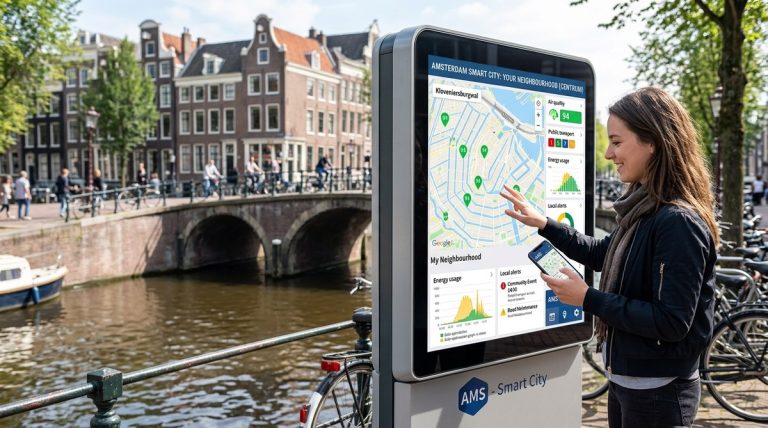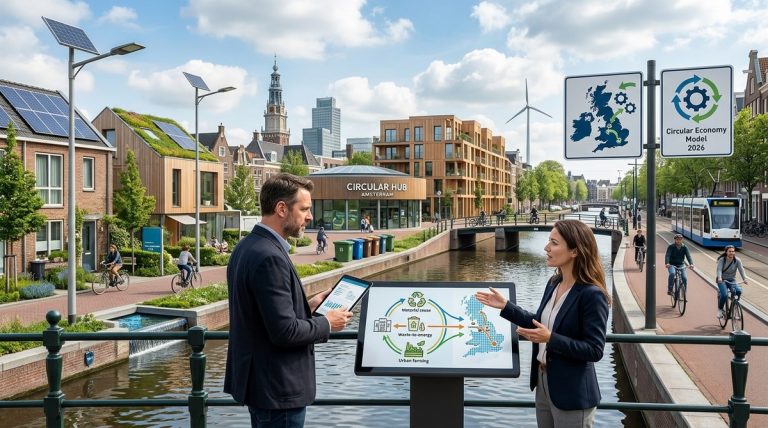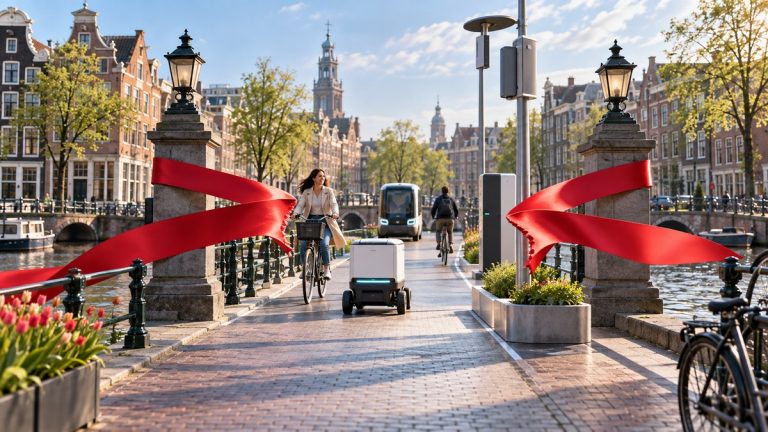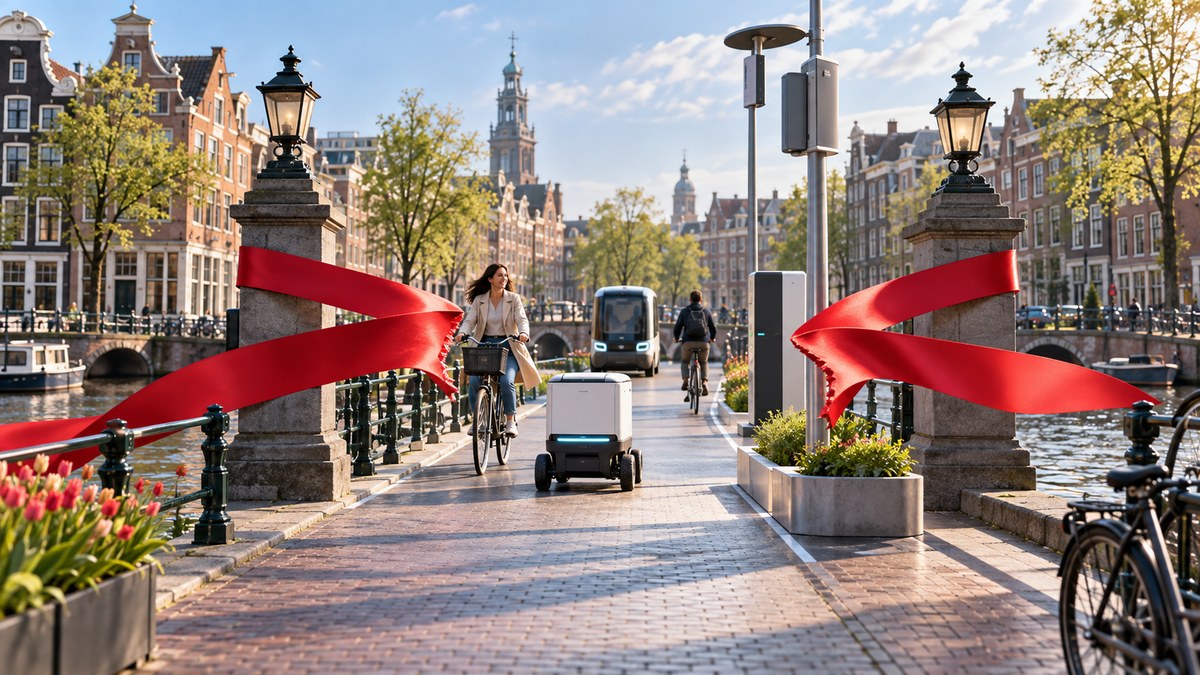
If you are an urban tech entrepreneur trying to test a new sensor network or a mobility service in a European city, you know the feeling. You have the prototype ready. You have the team. But the city’s licensing department wants you to fill in seventeen forms, wait six months for a committee meeting, and then pay a fee that eats half your seed funding. Amsterdam decided this was broken. So they built a new system.
The Amsterdam urban tech pilot licensing model is not just a faster queue. It is a fundamental rewrite of how a municipality says “yes” to experiments. Instead of treating every pilot as a permanent change to city infrastructure, the city treats it as a temporary learning opportunity. The result? Approval times have dropped by more than half. More pilots launch. More data gets collected. And the city learns what works before it commits to a full-scale rollout.
Amsterdam’s licensing model for urban tech pilots replaces the old one-size-fits-all permit process with a tiered, time-boxed system. It reduces the administrative burden on startups by using standardised agreements, predefined risk categories, and a single digital portal. For city innovation officers and policy researchers, this approach offers a replicable blueprint for cutting red tape without sacrificing safety or public accountability.
How the Amsterdam model works in practice
The core idea is simple. Instead of asking for a full building permit or a permanent operating licence, the city issues a pilot licence. This licence is temporary, usually between six and eighteen months. It comes with a clear scope, a list of allowed locations, and a set of conditions that scale with the risk of the project.
Here is the step-by-step process that an urban tech entrepreneur follows today in Amsterdam.
-
Submit a standardised digital application. The city provides a single online form. You describe your technology, the duration, the geographic area, and the expected impact on public space. No attached PDFs. No certified translations. The form adapts based on your answers, so you only fill in what is relevant.
-
Automatic risk classification. The system sorts your project into one of three tiers. Low risk (for example, a small air quality sensor on a lamppost). Medium risk (a shared e-scooter fleet in one district). High risk (autonomous delivery robots on shared pedestrian paths). Each tier triggers a different review path.
-
Parallel review by city departments. Once classified, the application is sent simultaneously to the relevant teams: public space, mobility, data privacy, and the local district office. They have ten working days to raise objections. If nobody objects, the licence is granted automatically.
-
Issuance of a pilot licence. The licence includes a simple dashboard where you must report key metrics monthly. If you stay within the agreed boundaries, no further checks are needed. If you want to expand, you submit a change request, which takes five days.
This system replaced a process that used to require up to four separate permit applications and a minimum of twelve weeks. Today, a low-risk pilot can get a licence in under two weeks.
Three things that make the model different
The Amsterdam urban tech pilot licensing model did not appear out of thin air. It was designed around three principles that other cities often miss.
-
Temporary by default. The licence automatically expires. This removes the fear that a pilot will become permanent without proper scrutiny. Neighbours and local businesses know the experiment has an end date, which builds trust.
-
Risk-based, not technology-based. The city does not care whether you are using LoRaWAN, 5G, or a custom radio frequency. It cares about what happens if your device falls off a pole or if your app collects location data. This stops the licensing team from getting stuck on technical jargon.
-
One single point of contact. The city appointed a “pilot coordinator” for each district. That person is the only human you need to speak to. They handle the internal handoffs. For the entrepreneur, this cuts the frustration of being passed from department to department.
Common mistakes cities make when setting up pilot licensing
Not every city gets this right. Amsterdam learned from its own early failures and from watching other municipalities. The table below shows what works and what does not.
| Common mistake | What Amsterdam does instead |
|---|---|
| Requiring the same permit for every pilot | Use a tiered system with lighter checks for low-risk projects |
| Asking for detailed technical specs upfront | Ask for the intended outcome and risk profile first |
| Letting each department review sequentially | Run all reviews in parallel with a ten-day deadline |
| Charging high fees to cover administrative costs | Keep fees low (under €200) and fund the team from the city’s innovation budget |
| Making the licence permanent unless revoked | Make the licence expire automatically after the pilot period |
| Requiring a physical signature on paper | Use a digital signature with two-factor authentication |
What policy researchers should watch for
If you are a policy researcher looking at regulatory sandboxes, the Amsterdam model offers a few lessons that go beyond the surface.
The city did not change any national laws. It worked within existing Dutch legislation by reinterpreting the definition of a “temporary use of public space”. This is a clever legal hack. Most European cities have some form of temporary use clause in their local ordinances. You do not need a new law. You need a new administrative procedure.
The model also includes a mandatory data-sharing clause. Every pilot must publish its data (anonymised) on the city’s open data portal after the pilot ends. This creates a public record of what worked and what did not. It turns every pilot into a piece of shared research.
“We stopped asking for business plans and started asking for learning plans. If a pilot fails technically but teaches us something about pedestrian behaviour, that is still a success for the city.” — Programme Lead, Amsterdam Smart City Office
How this connects to the bigger picture
Amsterdam’s licensing model is not an isolated project. It sits inside a wider ecosystem of urban innovation tools. The city also runs living labs, digital twins, and citizen co-creation programmes. The pilot licence is the front door. Once a project proves itself, it can move into a longer-term partnership or a scaled deployment.
For example, a startup that tested smart waste sensors under a pilot licence in 2024 is now part of a district-wide rollout in 2026. The data they collected during the pilot helped the city optimise collection routes before spending any money on permanent infrastructure. This is the kind of outcome that the Amsterdam urban tech pilot licensing model was designed to enable.
If you are a city innovation officer, you can use this model to justify a similar shift in your own municipality. The business case is straightforward: shorter approval times mean more pilots, more pilots mean more data, and more data means better policy decisions.
Practical steps to bring this model to your city
You do not need to be Amsterdam to use this approach. Here is a checklist for any city team that wants to cut its own red tape.
- Audit your current pilot approval process. Count the number of forms, signatures, and departments involved. Map the average time from application to approval.
- Identify one district or one type of pilot (for example, environmental sensors) to test a tiered licensing system.
- Assign a single coordinator. This person does not need to be a senior manager. They just need the authority to nudge departments.
- Set a maximum review period. Start with fifteen working days. Reduce it over time.
- Create a simple digital form. Use existing municipal software if possible. Do not build a custom platform from scratch.
- Communicate the change publicly. Tell startups and researchers that the city is open for experiments.
The real impact on entrepreneurs
For the entrepreneur, this model changes the conversation. Instead of spending three months on paperwork, you spend three weeks. Instead of hiring a lawyer to interpret permit conditions, you read a five-page pilot licence. Instead of worrying that your pilot will be shut down by a complaint, you know exactly what you are allowed to do and for how long.
One founder of a last-mile logistics startup told us that the Amsterdam pilot licence saved them about €40,000 in legal fees and lost time compared to launching in a neighbouring city. That is money that went back into product development and hiring.
A living system that keeps improving
The model is not static. The city reviews the tier classifications every year. If a category of pilot consistently causes no problems, it gets moved to a lower tier with fewer checks. If a new technology introduces unexpected risks, a new tier can be added. This feedback loop keeps the system honest.
In 2026, Amsterdam is also testing a “fast-track” lane for pilots that have already been approved in another European city. Mutual recognition of pilot licences is still a distant goal, but the city is working on bilateral agreements with Copenhagen and Barcelona. If that works, an entrepreneur who tested a device in Barcelona can bring the same device to Amsterdam with almost no additional paperwork.
What the Amsterdam urban tech pilot licensing model means for the future of city innovation
Cities around the world are realising that their permitting processes were designed for a different era. They were built for permanent construction, not for iterative experimentation. The Amsterdam model shows that you can keep public safety high while making the process radically simpler.
The key is to stop thinking of a pilot as a mini-version of a permanent installation. A pilot is a research project. It should be approved like one. It should have a clear hypothesis, a fixed duration, and a commitment to share what was learned.
If you are an urban tech entrepreneur, look at Amsterdam’s system and ask your local city council why they cannot do the same. If you are a policy researcher, use the Amsterdam case as a benchmark for your own regulatory sandbox recommendations. If you are a city innovation officer, steal this model. That is what the city wants you to do.
The Amsterdam urban tech pilot licensing model is not a secret. It is a public tool, documented, measured, and shared. The only thing stopping another city from adopting it is the decision to start.
About the Author