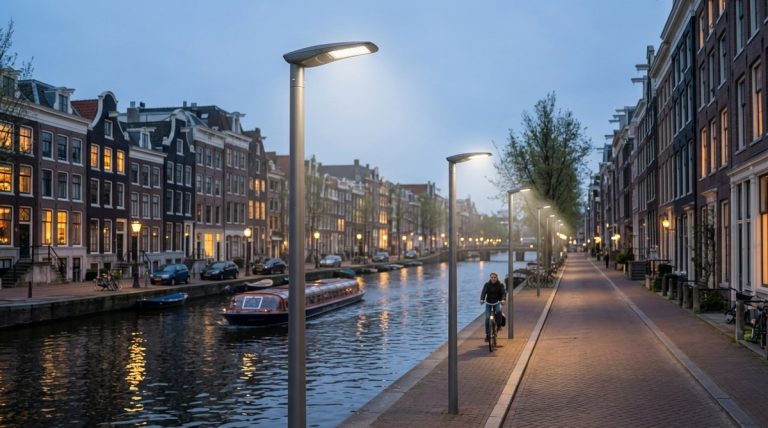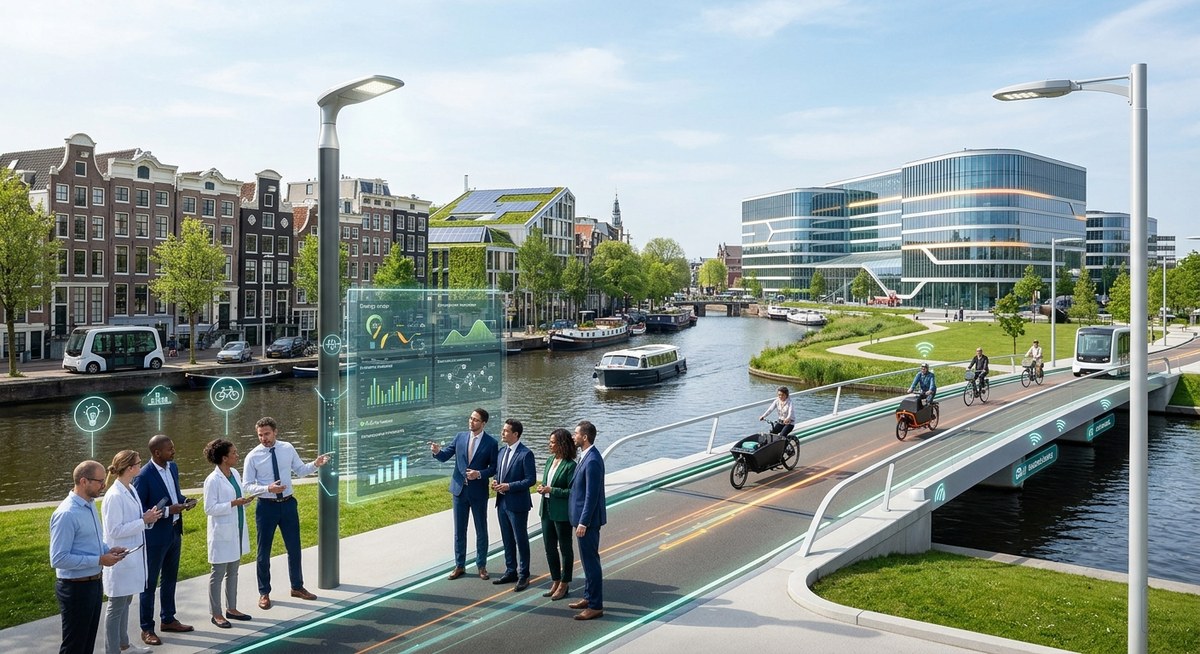
Amsterdam has long punched above its weight when it comes to shaping the future of cities. From its 17th century canal ring to the high tech campuses of today, this Dutch capital continually reinvents urban life. In 2026, it remains the benchmark for metropolitan innovation. City planners, academics and smart city enthusiasts look to Amsterdam not just for inspiration, but for a replicable playbook.
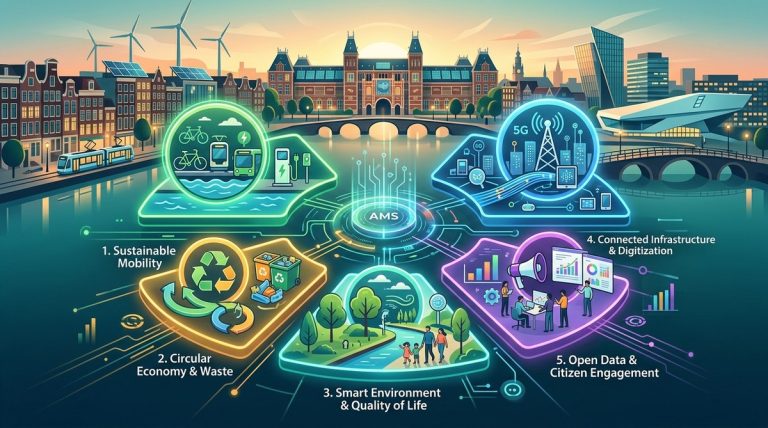
Amsterdam leads urban innovation through a unique blend of open data, collaborative governance, circular economy principles and citizen co creation. Its success rests on four pillars: partnership between public, private and research sectors; a pragmatic, experimental culture; investment in digital infrastructure; and a strong focus on sustainability. These lessons are directly applicable to cities worldwide.
What Sets Amsterdam Apart as an Urban Innovation Leader
Other cities talk about smart grids or autonomous vehicles. Amsterdam builds them. But the real difference lies in how the city approaches innovation. It treats urban challenges as shared problems, not government projects. This collaborative mindset runs through everything.
- Open data by default – The city publishes hundreds of datasets online. Anyone can use them to build apps or analyse traffic patterns.
- Living labs everywhere – Neighbourhoods become test beds for new technologies. Citizens try out sensors, green roofs and shared mobility before they scale.
- Circular economy targets – Amsterdam aims to halve its use of raw materials by 2030. Construction projects must reuse at least 30% of materials.
- Mobility as a service – A single app integrates bikes, trams, trains and shared cars. Cycling gets the lion’s share of road space.
- Citizen participation – Residents vote on how to spend part of the municipal budget. They also co design public spaces.
These aren’t isolated initiatives. They work together. As one city official put it, “Innovation is a system, not a single gadget.”
The Pillars of Amsterdam’s Innovation Strategy
Amsterdam’s approach rests on four interconnected pillars. Each reinforces the others.
1. Collaborative Governance
No single organisation owns the smart city agenda. The Amsterdam Economic Board, the metropolitan region, knowledge institutions and businesses all sit at the same table. This structure prevents silos and keeps projects grounded in real needs.
2. Data Infrastructure and AI
The city runs one of Europe’s most open data platforms. Thousands of real time data streams cover air quality, energy use, waste collection and crowd movement. Algorithms help optimise traffic lights and predict maintenance needs. For a deeper look at how data transforms policy, read The Role of Data and AI in Transforming Urban Policy in Amsterdam.
3. Circular and Green Transition
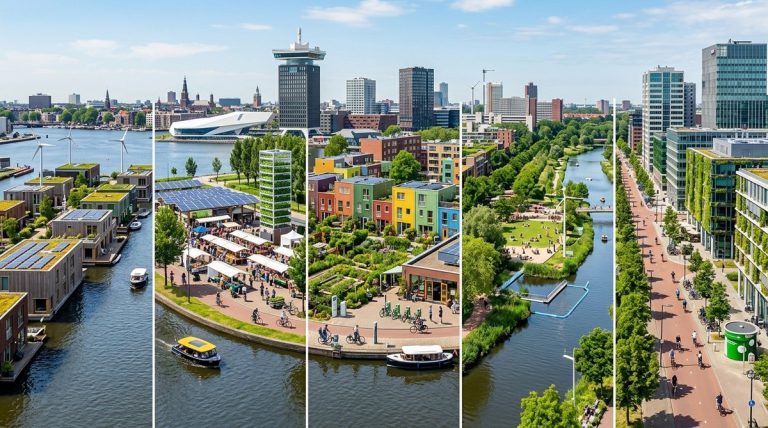
Amsterdam treats waste as a resource. The circular economy isn’t a slogan; it’s embedded in zoning laws and procurement. New buildings must include green roofs, solar panels and water storage. The city’s Future of Urban Sustainability report shows how these principles scale.
4. Citizen Co Creation
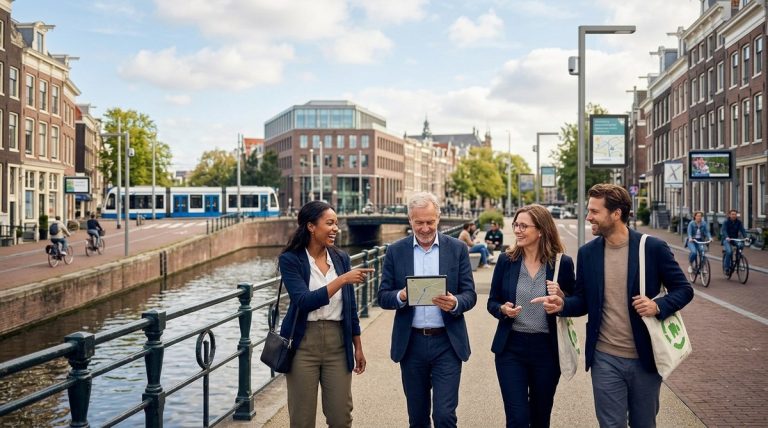
Top down planning fails in Amsterdam. Instead, the city funds neighbourhood initiatives and hosts regular “city labs”. Residents test prototypes and give feedback. This bottom up approach builds trust and ensures solutions fit local contexts.
Three Proven Approaches from Amsterdam’s Playbook
If you want to replicate Amsterdam’s success, start with these three strategies.
-
Start small, scale fast
Pick one street or one district. Install sensors, try a new bike lane or pilot a communal energy scheme. Measure results, adjust and then roll out citywide. Amsterdam’s first smart grid project covered just 300 homes. Today it powers the entire Johan Cruijff ArenA. -
Make data public and usable
Publishing data isn’t enough. The city offers developer support, workshops and clear licensing. Anyone can access the Amsterdam Data Exchange. This openness spawns third party apps that solve everyday problems, from finding a free parking spot to tracking waste collection. -
Blend physical and digital infrastructure
Amsterdam’s innovation districts like Marineterrein and Amsterdam Science Park combine high speed broadband with flexible workspaces and green courtyards. The digital layer (5G, IoT networks) is as carefully planned as the roads and canals. For more details, see Innovative Urban Solutions Shaping Amsterdam’s Future in 2026.
How Data and AI Drive Urban Policy
Data is the fuel for Amsterdam’s innovation engine. The city’s AI Strategy focuses on transparency and human oversight. Algorithms that allocate social housing or prioritise road repairs are audited for bias. This ethical stance builds public confidence.
A table summarises the main use cases:
| Domain | Data Source | AI Application | Outcome |
|---|---|---|---|
| Traffic management | Loop sensors, GPS from buses | Adaptive traffic light control | 15% reduction in travel time |
| Air quality | Low cost sensor network | Predictive modelling for pollution hotspots | Targeted low emission zones |
| Waste collection | Bin fill level sensors | Dynamic route optimisation | 20% fewer collection trips |
| Energy grid | Smart meters, weather forecasts | Renewable energy balancing | Reduced curtailment of solar power |
The city also runs an AI Ethics Board that reviews every new project. This governance model is studied by other municipalities. As one planner remarked, “Amsterdam proves that innovation and ethics can grow together.”
The Role of Citizen Engagement in Shaping the City
Amsterdam doesn’t just inform citizens; it invites them to lead. The “My City, My Choice” programme lets residents decide how to spend a portion of the municipal budget each year. In 2025, over 15,000 people voted on projects ranging from community gardens to pedestrian crossings.
Digital tools like the “City Dashboard” allow real time monitoring of noise, air quality and traffic. Citizens can report issues via the “Melder” app, which is linked directly to council workflows. This feedback loop shortens response times and makes government more accountable.
For a comprehensive overview, read Harnessing Citizen Engagement to Accelerate Urban Innovation in Amsterdam. The lesson is clear: when people feel ownership, they protect and improve their city.
Real World Results: A Look at Key Metrics
Numbers tell a convincing story. Amsterdam’s innovations have produced tangible improvements.
- Cycling modal share rose to 38% in 2025, up from 32% in 2020.
- CO2 emissions from municipal buildings dropped 40% since 2015.
- Average commute time fell by 7% over the same period, thanks to smarter traffic management.
- Citizen satisfaction with public services reached 82% in the latest city survey.
These results didn’t happen by accident. They came from patient, evidence based policy making. City officials track progress against 100 indicators and publish an annual “Smart City Report” openly.
Lessons for Urban Planners and City Officials
Amsterdam’s experience offers actionable insights for any city serious about innovation.
“Start with trust, not technology. If citizens don’t understand how data is used, they will resist. Co create the rules first, then the tools. That’s how you build a truly smart city.”
— Dr. Marleen Stikker, Amsterdam Smart City Programme Director
Translation: invest in transparency before investing in sensors. Put a human centred design process at the core. Measure outcomes that matter to people, not just technical efficiency.
A Blueprint for Your Own City
Amsterdam’s status as an urban innovation leader in 2026 is no accident. It results from decades of deliberate choices, a willingness to experiment and a belief that cities are best built by everyone who lives in them.
If you’re an urban planner, start by mapping your own data ecosystem. If you’re a city official, set up a citizen participation budget for a single district. If you’re an academic, study how Amsterdam’s multi stakeholder governance works in practice. Each small step mirrors what Amsterdam does at scale.
The city’s journey shows that innovation doesn’t mean building something entirely new. Often it means connecting existing systems in smarter ways, opening up data and trusting people to contribute. That’s a lesson every city can take home.
About the Author