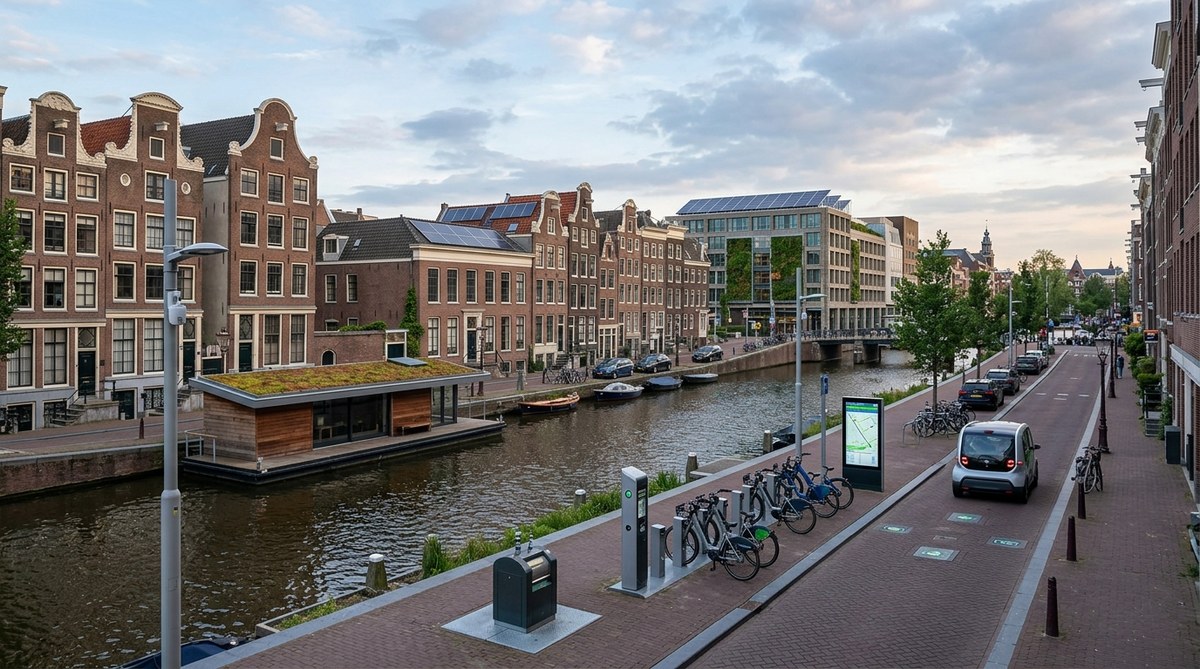
Amsterdam stands at the forefront of urban innovation, blending technology with a firm commitment to sustainability. As cities across the globe grapple with climate change, congestion, and resource management, Amsterdam’s smart city initiatives demonstrate what is possible when innovation is driven by a clear environmental vision. In 2026, the Dutch capital continues to pioneer solutions that make urban living more efficient, cleaner, and more inclusive, offering a compelling blueprint for other cities aiming to enhance their sustainability.
Amsterdam’s smart city sustainability efforts showcase how integrating innovative technology, green planning, and community involvement can create a resilient, eco-friendly urban environment that benefits residents and the planet alike in 2026.
How Amsterdam integrates smart technology for sustainable urban growth
Amsterdam has embraced a holistic approach to urban sustainability by deploying smart technologies across transport, energy, waste management, and civic engagement. This strategy ensures that city operations are not only efficient but also environmentally responsible.
Key initiatives shaping the city’s eco-friendly evolution
- Smart mobility solutions reduce congestion and emissions through intelligent traffic management and shared transportation schemes.
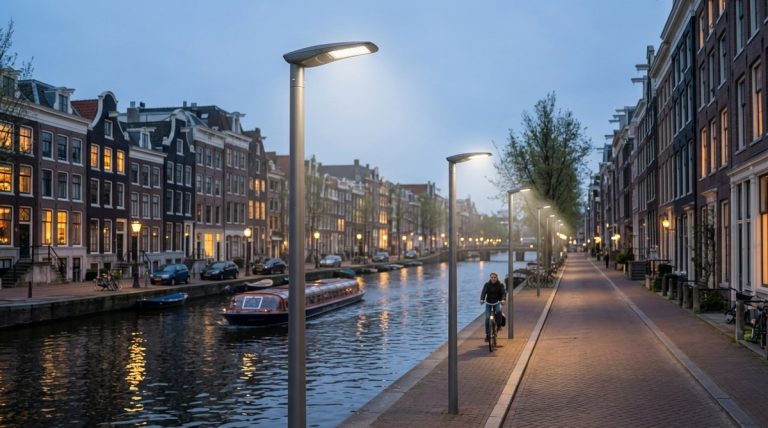
- Energy-efficient infrastructure leverages data analytics to optimise electricity and heating systems, prioritising renewable sources.
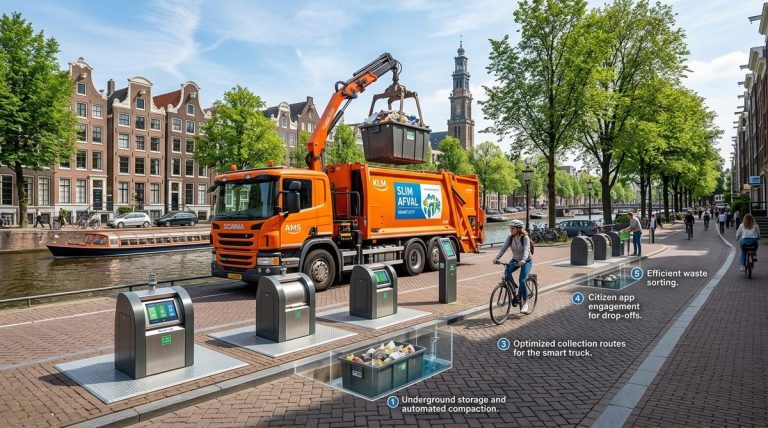
- Waste reduction programmes utilise IoT sensors for real-time bin monitoring, ensuring timely collection and minimising overflow.
- Green public spaces integrate smart irrigation and climate-responsive design to preserve biodiversity and improve air quality.
Practical steps for replicating Amsterdam’s success
- Assess local needs and opportunities by analysing traffic patterns, energy consumption, and waste flows.
- Invest in IoT infrastructure to collect data and enable smarter resource management.
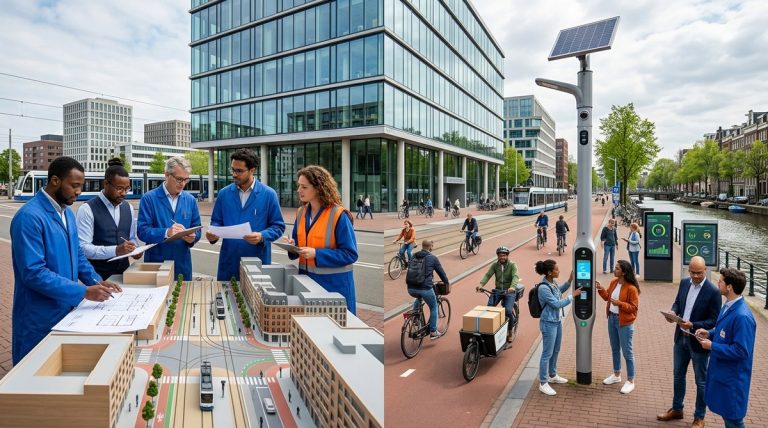
- Engage citizens actively through platforms that allow input and feedback on sustainability projects.
Community engagement as a pillar of citywide sustainability
Amsterdam’s approach extends beyond technology. The city actively involves its residents in shaping sustainable solutions. This community-centric method fosters ownership and accelerates adoption of eco-friendly practices.
How residents contribute to the green vision
- Participating in urban gardening and green roof initiatives.
- Using digital platforms to report infrastructure issues or suggest improvements.
- Supporting local businesses that prioritise sustainability.
Examples of citizen-led projects
- Community solar panel schemes that allow neighbours to share renewable energy.
- Urban farming programmes that utilise smart water management systems.
- Educational campaigns raising awareness about reducing carbon footprints.
As urban sustainability expert Dr. Emily Carter notes, “Engaged communities are the backbone of successful smart city initiatives. When residents see the tangible benefits, they become active partners in creating a greener future.”
Strategies for fostering sustainable innovation in urban planning
The city’s governance model combines transparency, collaboration, and flexibility. This encourages experimentation and rapid learning from mistakes.
Practical processes for integrating innovation
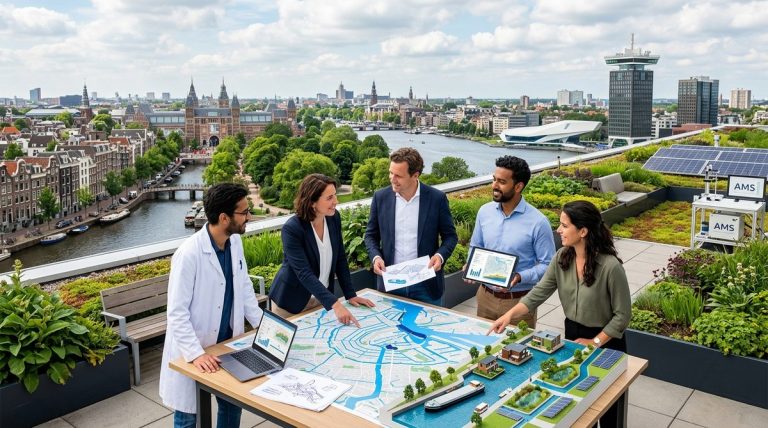
- Create dedicated innovation hubs where policymakers, entrepreneurs, and residents can collaborate on green projects.
- Implement pilot programmes to test new technologies on a small scale before citywide deployment.
- Establish feedback loops to monitor outcomes, gather insights, and adapt initiatives accordingly.
Common pitfalls to avoid
| Techniques | Mistakes to Avoid |
|---|---|
| Prioritising pilot projects without community input | Ignoring resident feedback can lead to low adoption. |
| Over-reliance on untested technology | Rushing into solutions may cause unforeseen issues. |
| Lack of transparent communication | Failing to explain the benefits can breed scepticism. |
Examples of innovative projects in Amsterdam
- Smart grid systems that optimise energy flows based on real-time data, reducing waste.
- Urban heat island mitigation using reflective surfaces and green infrastructure.
- Mobility hubs integrating electric buses, bikes, and car-sharing services to lower emissions.
- Digital twins that simulate city scenarios for better planning and disaster preparedness.
How other cities can learn from Amsterdam’s journey
Amsterdam’s experience offers valuable lessons for urban centres aiming to enhance sustainability:
- Foster cross-sector collaboration between government, industry, and residents.
- Use data proactively to identify inefficiencies and test solutions.
- Prioritise social inclusion to ensure all residents benefit from green initiatives.
- Maintain transparency to build trust and encourage participation.
Techniques and common mistakes in smart city sustainability projects
| Techniques | Mistakes to Avoid |
|---|---|
| Incorporating citizen feedback early | Ignoring community input can hinder success. |
| Focused use of renewable energy | Relying solely on non-renewable sources defeats sustainability goals. |
| Integrating green infrastructure | Overlooking maintenance can cause project failure. |
| Regular evaluation and adaptation | Sticking rigidly to initial plans may miss opportunities for improvement. |
The role of policy and leadership in driving sustainability
Strong leadership underpins all successful smart city initiatives. Amsterdam’s policymakers set clear targets for carbon reduction, renewable energy adoption, and waste minimisation. They also create enabling environments for innovation through funding, regulation, and public awareness campaigns.
Looking ahead: the future of Amsterdam’s smart city sustainability
By 2026, Amsterdam aims to become a climate-neutral city, with ongoing projects expanding renewable energy use, enhancing green spaces, and improving mobility options. The city’s focus on resilience, inclusivity, and smart technology positions it as a model for sustainable urban growth.
Practical advice for other urban planners
- Emphasise citizen engagement to ensure projects meet real needs.
- Use data to guide decisions and optimise resource use.
- Invest in scalable, adaptable solutions that can evolve with the city.
- Prioritise transparency to build trust and foster collaboration.
A warm invitation to rethink urban living
Amsterdam’s journey demonstrates that sustainable urban development is an ongoing process. It requires innovation, community involvement, and committed leadership. By adopting similar approaches, other cities can create healthier, more liveable environments for generations to come. Remember, the future of urban living is in our hands. Embrace smart solutions and work together to build greener, smarter cities in 2026 and beyond.
About the Author