Amsterdam has been running live experiments in smart mobility for over a decade. Some worked. Some failed. All of them taught the city something valuable. For urban planners, policymakers, and researchers who want to apply those findings at home, the question is simple: what actually works, and what does not?
Amsterdam’s smart mobility experiments reveal that technology alone is not enough. Success depends on trusted data sharing, early citizen involvement, and integrated transport modes. The city’s biggest breakthroughs came from small pilots, honest failure reviews, and partnerships built on clear rules. These seven lessons give any city a practical starting point for smarter, fairer mobility in 2026.
Why Amsterdam became a living lab for smart mobility
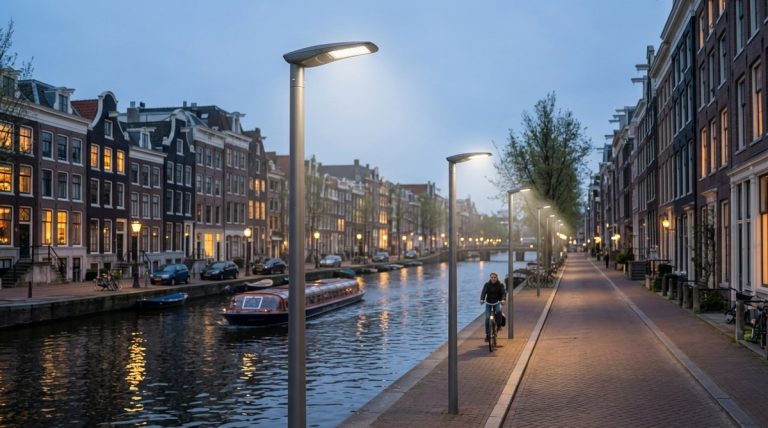
Amsterdam has always been a city of tight spaces. Narrow streets, centuries old canals, and a population that keeps growing. Add a cycling culture that puts bikes first and you have a puzzle that refuses to solve itself.
The city decided to treat the whole urban area as a testing ground. Instead of commissioning reports that gathered dust, it launched real pilots on real streets. Traffic lights that talk to bikes. Delivery hubs that cut van journeys. Parking sensors that guide drivers to empty spaces. Each experiment fed into the next.
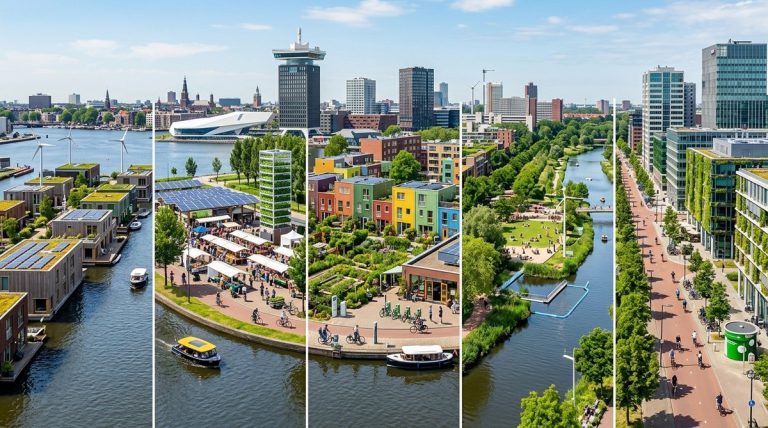
The result is a body of evidence that other cities can use. The Amsterdam smart mobility lessons are not abstract theories. They are grounded in what actually happened on the ground.
Lesson 1: Start with small pilots and scale deliberately
The biggest mistake cities make is trying to roll out a city wide system before it has been tested. Amsterdam learned this the hard way.
Early attempts to install smart traffic infrastructure across all nine districts hit delays and budget overruns. The technology worked, but the rollout was too complex. So the city changed tack. It ran small pilots in single neighbourhoods for three to six months. Each pilot had clear success metrics: reduced congestion, lower emissions, or higher cyclist satisfaction.
Only after a pilot passed those metrics did the city expand it to the next district. This step by step approach saved money and built confidence among residents and politicians alike.
“We learned that scaling too fast destroys trust. When you go block by block, you bring people with you. When you try to do everything at once, you leave people behind.”
Senior urban strategist, Amsterdam Institute for Advanced Metropolitan Solutions
Lesson 2: Data sharing works only when everyone trusts the rules
Smart mobility runs on data. But getting private operators to share their data is a persistent challenge. Ride sharing companies, scooter firms, and logistics providers all collect valuable information. They guard it carefully.
Amsterdam created a data trust framework. It defined who could see what, how long data could be kept, and what anonymisation standards applied. The framework was not imposed from above. It was co designed with the companies themselves.
The results were striking. Once operators trusted the rules, they shared real time location data for scooters and bikes. The city used that data to adjust parking zones and reduce pavement clutter. In 2025, this system cut street level obstructions by 18 percent in the city centre.
For more on how Amsterdam handles urban data, read about the role of data and AI in transforming urban policy in Amsterdam.
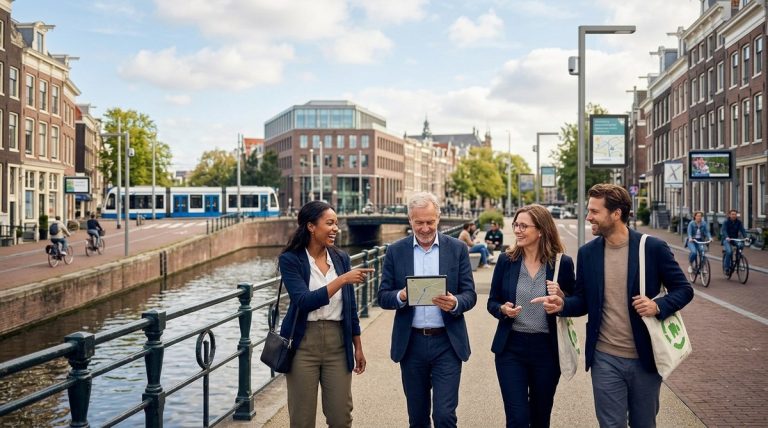
Lesson 3: Citizens must be part of the experiment, not just its recipients
A smart mobility system that ignores local knowledge will fail. Amsterdam found that residents spotted problems that sensors missed. A new bike lane looked perfect on a dashboard, but older cyclists found the surface too slippery in wet weather. A smart junction reduced waiting times for cars but created dangerous crossings for school children.
The city introduced a feedback loop called the Street Level Panel. Residents could report issues through a simple app. Their reports were reviewed weekly by the mobility team. If three or more people flagged the same problem, the team paused the pilot and investigated.
This approach turned citizens from passive users into active co designers. It also reduced complaints. When people felt heard, they accepted disruptions more willingly.
Here is a breakdown of what Amsterdam did right and what it initially got wrong with citizen engagement:
| Approach | Mistakes made early on | Successful method |
|---|---|---|
| Communication | Technical jargon in public updates | Plain language and visual maps |
| Timing | Telling residents after decisions | Inviting input before pilots began |
| Feedback handling | Ignoring reports for weeks | 48 hour response target |
| Incentives | No recognition for participants | Small rewards like bike vouchers |
| Representation | Only engaging vocal residents | Targeted outreach to elderly and disabled groups |
Lesson 4: Integrate modes of transport instead of treating them separately
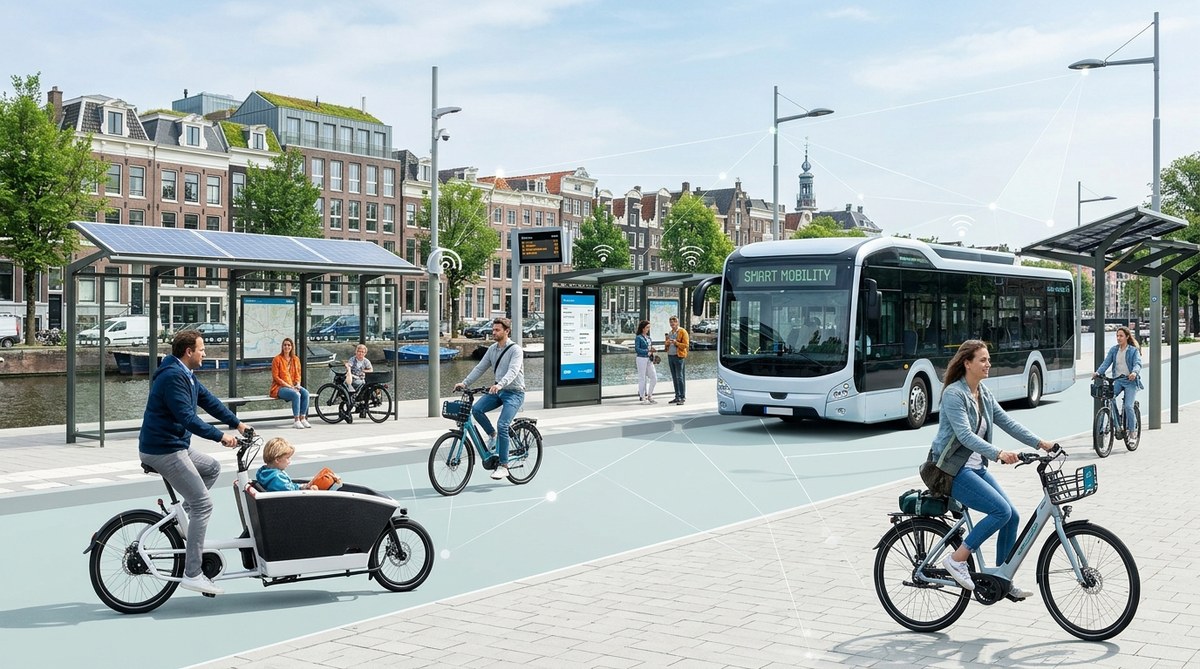
One of the most important Amsterdam smart mobility lessons is that modes must talk to each other. A bike friendly policy that ignores tram schedules creates conflict. A new bus lane that cuts through a cycle path causes danger.
Amsterdam built a Mobility as a Service platform called AmSmarter. It combined trains, trams, buses, shared bikes, and scooters into a single app. But the real innovation was behind the scenes. The city connected the traffic management systems for all modes into one control centre.
When a tram was delayed, the system automatically adjusted traffic lights to give it priority. When a popular cycling route was busy, the app suggested an alternative path using quieter streets. When a delivery van needed a loading bay, the system reserved one in real time.
The result was a 12 percent reduction in overall journey times across the city in 2025. Not because any single mode was faster, but because they worked together.
To see how this connects to broader sustainability goals, take a look at how Amsterdam uses smart technologies to create a more sustainable city.
Lesson 5: Failure is a dataset, not a disaster
Every city that experiments will have failures. Amsterdam is open about its own. In 2023, it tested autonomous delivery pods in the Jordaan district. The pods worked well on wide streets but got stuck on narrow pavements and confused pedestrians. The pilot was stopped after four months.
Rather than burying the project, the city published a full report. It explained what went wrong, why it went wrong, and what the team would do differently next time. That report has been downloaded over 4,000 times by urban planners in other cities.
The key lesson is simple. Failures generate data that successes cannot. They reveal edge cases, user frustrations, and infrastructure gaps. If you treat failure as a learning tool rather than a scandal, you build a culture of honest experimentation.
Here are the practical steps Amsterdam now uses to handle failed pilots:
- Document everything from day one, including decisions that seemed right at the time.
- Set a clear stop condition before the pilot starts. If X happens by Y date, the pilot ends.
- Hold a post pilot review within 30 days of stopping. No blame, just learning.
- Publish the findings openly, even if they are uncomfortable.
- Share the lessons with other departments and cities.
Lesson 6: Public private partnerships need clear boundaries
Smart mobility depends on private companies. They provide the scooters, the apps, and the logistics. But their goals are not the same as a city’s goals. A scooter company wants maximum rentals. A city wants safe streets and low emissions.
Amsterdam learned to write contracts that aligned incentives. Each private partner had to meet public interest targets to keep their licence. For example, scooter operators had to ensure that 95 percent of trips ended in designated parking zones. If they failed, their fleet size was reduced.
This approach created a partnership that worked. Companies could still make money, but only by helping the city meet its own objectives. The number of illegally parked scooters dropped by 40 percent in 2025.
For a deeper look at how these partnerships drive change, read about how Amsterdam’s urban innovation ecosystem is accelerating sustainable city solutions in 2026.
Lesson 7: Equity must be built in from the start
The final of the seven Amsterdam smart mobility lessons is the most important. Smart mobility can widen inequality if you do not design for it.
Early smart mobility pilots in Amsterdam tended to serve younger, wealthier, tech savvy residents. Older people, lower income households, and non Dutch speakers were often left out. The city realised this was not sustainable.
It introduced a mobility equity standard. Every new pilot had to show how it would serve at least three different demographic groups. If it could not, it was redesigned. The city also kept free transport options unchanged. A smart app might offer convenience, but a bus timetable that is not online must still be available on paper.
This equity first approach did not slow down innovation. It made the innovations more useful to more people. And that built the broad public support that keeps funding in place.
Putting these lessons to work in your city
The Amsterdam smart mobility lessons are not a manual to copy. No two cities are the same. But they offer a starting point.
Start with one small street, not the whole district. Share data only when trust is solid. Talk to residents before you build anything. Connect your bus lanes to your bike paths. Write contracts that serve the public first. Publish your failures as honestly as your successes. And make sure everyone benefits, not just the people who already have the newest phone.
Amsterdam is still learning. The experiments keep running. The data keeps flowing. And the city keeps publishing what it finds. That openness is perhaps the biggest lesson of all. If you want to build a smarter city, you have to be willing to show all the work, the good and the messy.
For more examples of how Amsterdam approaches urban innovation, visit innovative urban solutions shaping Amsterdam’s future in 2026.
About the Author